Purple Coneflower
Immune-stimulating preparations made from echinacea are sold in over 80 countries.
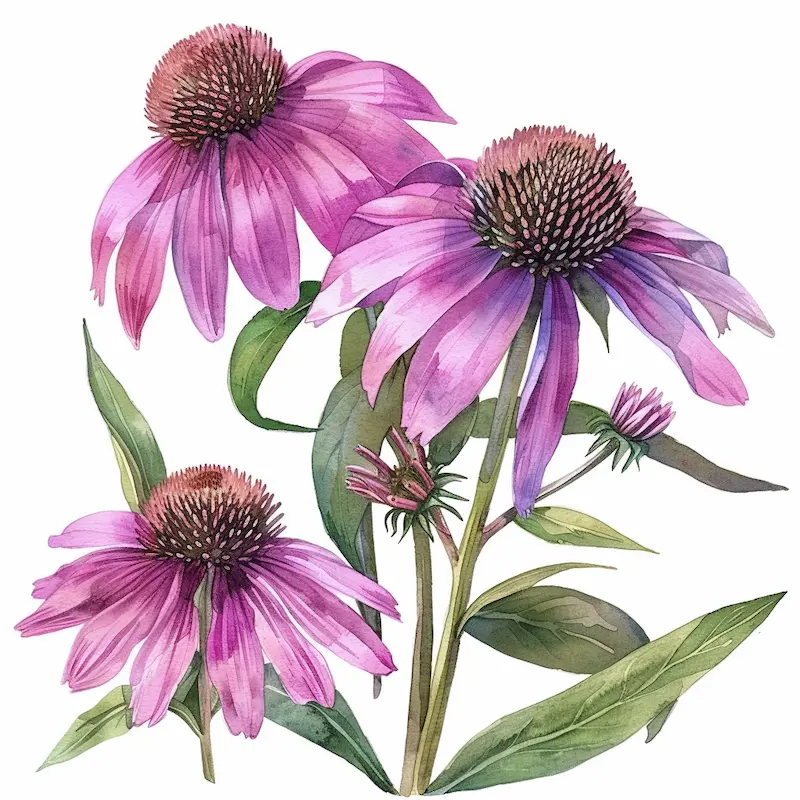
Purple Coneflower is one of the most beloved flowers among gardeners in the Northern Hemisphere, and for good reason. It originates from North American prairies, where it has grown wild for thousands of years, adapting to arid conditions and scorching summers. European settlers quickly appreciated its hardiness, and local indigenous tribes have long used the roots as a healing remedy. Today, Purple Coneflower is a cultivated plant that has established itself throughout the world and has become a symbol of natural beauty and wellness.
This beauty is easy to recognise: characteristic purple and pink petals arranged around an orange-brown 'cone-like' disc at the centre of the flower. The Latin name 'echinacea' derives from this very feature — from the Greek 'echinos' (hedgehog). It blooms generously from July to September, with each flower standing like a small lantern on a sturdy stem. There are several cultivars available — from the classic purple to soft pink and white-pink varieties, each bringing its own charm to the flower bed.
In the garden, Purple Coneflower works tirelessly: it attracts butterflies and bumblebees, providing them with nectar throughout the summer, and serves as a food source for finches in autumn, which peck at the seeds. It looks wonderful as part of mixed borders, in arrangements (both fresh and dried), alongside ornamental grasses and other flowering plants. Drought-tolerant once established, it requires virtually no attention and thrives where other plants struggle in the heat.
This is why you should grow Purple Coneflower — it is not simply a pretty flower, but a gardener's helper, a medicinal plant in the border, and a favourite of pollinating insects. Plant it where you wish to see life and movement in your garden, and it will not disappoint.
Purple Coneflower — planting & location
Medicinal, bee-friendly, attracts butterflies.
How to water Purple Coneflower
Drought-tolerant once established.
Fertilizing and pruning: Purple Coneflower
Cut back to 5 cm from ground level.