Black-Eyed Susan
Native to North America, where it is used in prairie gardens.
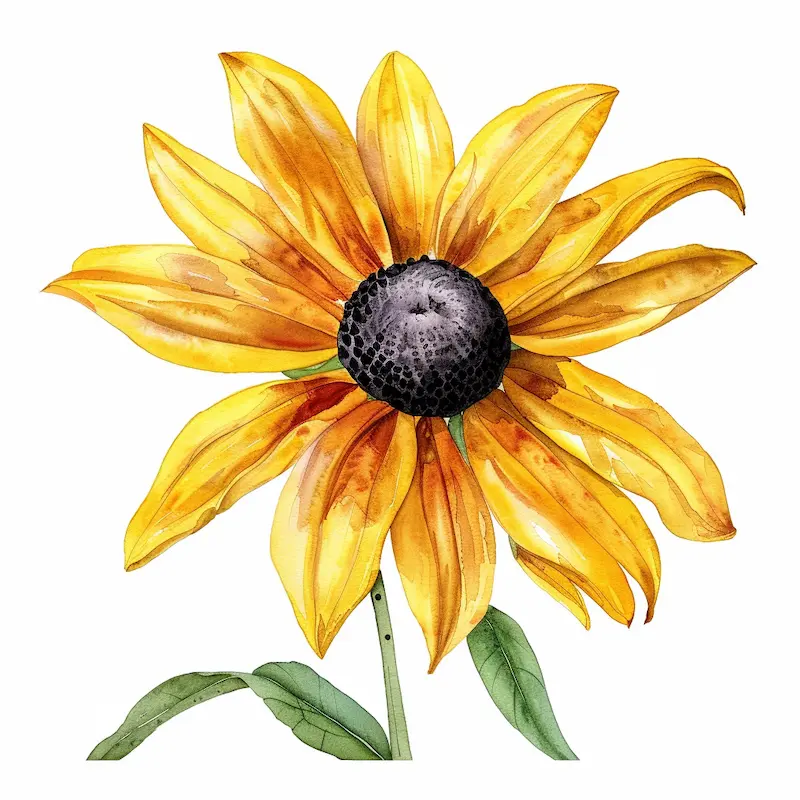
Rudbeckia fulgida, commonly known as Black-eyed Susan, is a reliable perennial beauty that originates from the North American prairies and has long captured the hearts of gardeners worldwide. It owes its name to the characteristic dark centre of the flowers, which contrasts beautifully with bright yellow petals—this striking contrast makes each flower truly distinctive and eye-catching in the garden.
The blooming period of this plant is a genuine gift for any gardener: from July until the first frosts, the bush tirelessly produces new buds, flooding the flower bed with sunlight. Rudbeckia fulgida forms an attractive, compact shrub with sturdy stems and narrow leaves that create an aesthetic backdrop for the flowers. Several interesting cultivars exist, ranging from the classic yellow-and-black to varieties with semi-double flowers and altered colouring, allowing you to create interesting compositions in your garden.
In the garden, Rudbeckia fulgida is a versatile plant that thrives equally well in sunny and semi-shaded locations. It is ideal for mixed borders and pairs wonderfully with other autumn beauties—asters, goldenrod, and ornamental grasses. When other plants have finished flowering, Rudbeckia continues to shine with its blooms, attracting bees and butterflies right through October. Independent of weather and soil conditions, this American native has become a true favourite among Ukrainian gardeners.
If you are seeking a plant that will flower throughout summer and autumn without constant attention and care, Rudbeckia fulgida is exactly what you need. It saves your time and energy while rewarding you with months of joy and colour.
Black-Eyed Susan — planting & location
Very undemanding; flowers until the first frost.
How to water Black-Eyed Susan
Drought-tolerant once established.
Fertilizing and pruning: Black-Eyed Susan
Cut back to ground level in autumn.