Oriental Poppy
The sap of opium poppy Papaver somniferum is the basis of morphine (but Oriental Poppy is safe).
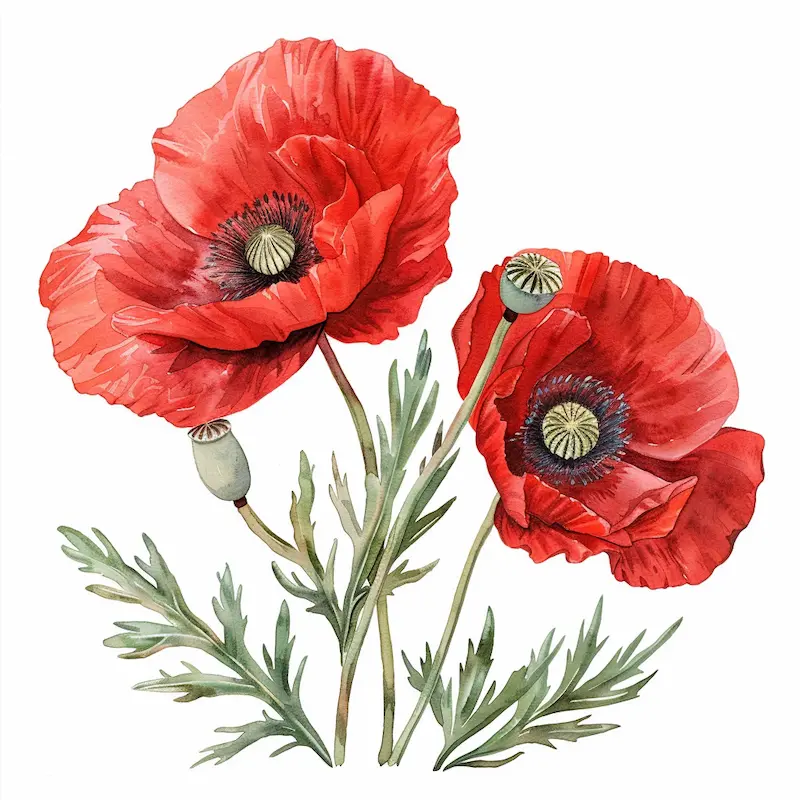
The Oriental Poppy is the true queen of the May garden, hailing from the mountainous regions of the Caucasus and Asia Minor. This perennial has been cultivated by gardeners for over two centuries, and its popularity shows no sign of waning. Large, spectacular flowers with delicate silky petals and black stamens at their centre burst forth with vivid colour and drama — from fiery reds to soft pinks, oranges, and even pure white varieties.
Contemporary Oriental Poppy cultivars have greatly expanded the palette of possibilities. Among them, the popular 'Türkenlouis' boasts double flowers, the delicate 'Watermelon' features pink petals with a fine black edge, and the incomparable 'Patty's Plum' displays a deep plum hue. Each variety bestows its own distinctive character upon the garden, and flowering from May through June creates a striking display when other plants are only just beginning their season.
In the garden, Oriental Poppy finds its place in mixed borders, cottage gardens, or as a solitary vertical accent. It pairs beautifully with lupines, delphiniums, phlox, and sage — companion plants help mask the 'gap' left behind when the poppy foliage dies back in summer. This is a plant that is half-wild, half-cultivated — undemanding of soil, hardy to the cold, and requiring virtually no maintenance beyond minimal watering.
The most striking impression of the Oriental Poppy comes precisely at the moment when the bud bursts into flower — it happens quite literally before your eyes. If you seek a plant that guarantees drama, colour, and joy in the spring garden, the Oriental Poppy is your choice.
Oriental Poppy — planting & location
After flowering, foliage dies back leaving a bare gap
How to water Oriental Poppy
Reduce watering after foliage dies back
Fertilizing and pruning: Oriental Poppy
Cut back completely — will regrow in autumn