Oregon grape
The berries of Oregon grape are used for making jams and natural blue dye.
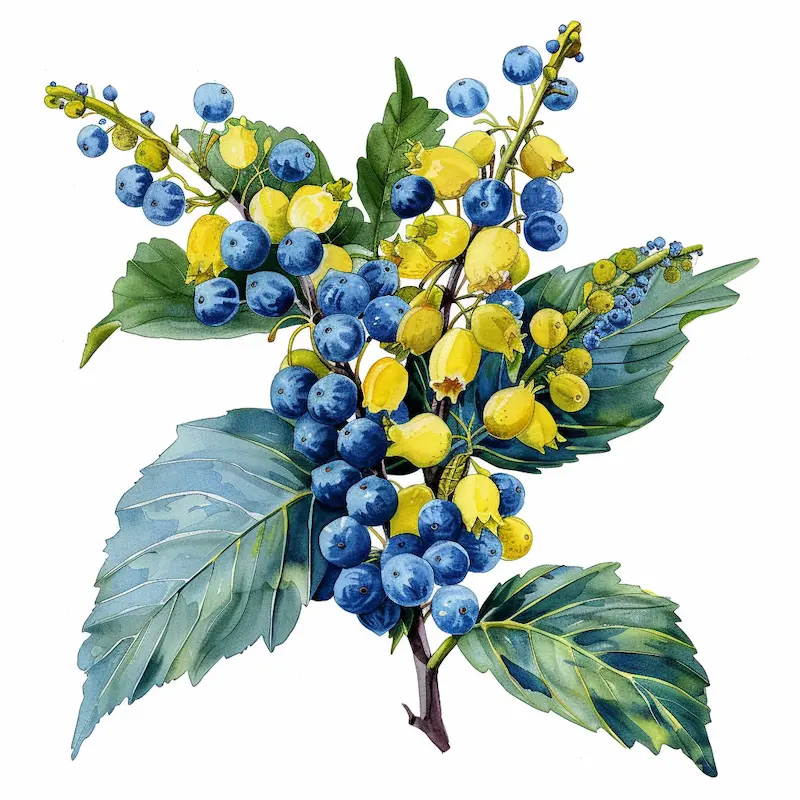
Oregon grape is one of gardeners' favourite plants for creating reliable greenery in shaded corners of the garden. This evergreen shrub, native to the western regions of North America, has been gracing gardens with beauty and practicality for centuries. From April to May, Oregon grape blooms with fragrant yellow flowers gathered in dense racemes, attracting insects and filling the air with a soft aroma.
The plant impresses with its sculptural beauty: its glossy leaves with sharp spines truly resemble holly, which is how it earned its name. The foliage has an interesting characteristic—in autumn, the leaves take on reddish and burgundy hues, making Oregon grape decorative throughout the year. Compact cultivars are popular in horticultural practice, easily fitting into small gardens and container compositions.
In the garden, Oregon grape is remarkably sociable—it grows wonderfully alongside heather, rhododendrons and box, especially in shaded group plantings. But the true treasure of Oregon grape lies in its berries. From June onwards, they ripen into beautiful blue-black globules, which can be used for jam, fruit drinks or even natural dye. Local gardeners have long known this secret and grow Oregon grape not only for beauty but also for its generous harvest.
If you need a plant that will not demand constant attention, yet always look like the queen of the garden—Oregon grape awaits you. It forgives shade and forgotten watering, but generously rewards you with beautiful foliage and sweet berries. In such a plant lies the true magic of gardening.
Oregon grape — planting & location
Evergreen with edible blue-black berries
How to water Oregon grape
Moderate watering
Fertilizing and pruning: Oregon grape
Remove old and damaged shoots