Heather
Heather honey is considered the most valued in Scotland and Norway.
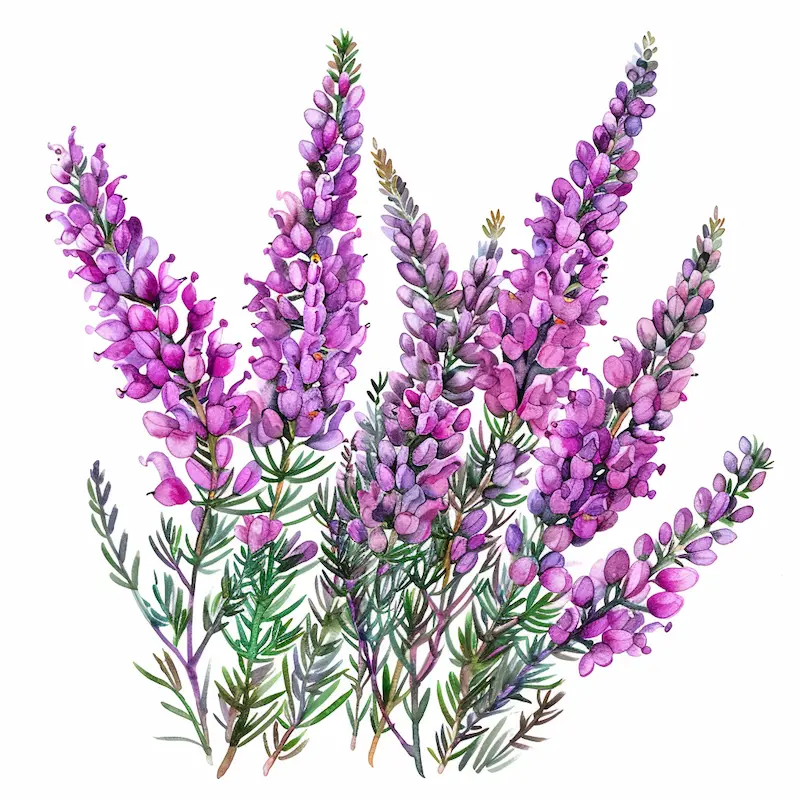
Common heather is one of the most romantic plants of northern Europe, gracing Scottish and Scandinavian moorlands for centuries. Originating from cold regions, this undemanding shrub has become a favourite among gardeners worldwide thanks to its wild charm, reliability, and longevity. Its natural resilience to challenging conditions and ability to thrive on poor soils have made it a symbol of beauty in simplicity — a plant that promises no ease, yet bestows true elegance.
The inner magic of heather unfolds in August, when delicate, densely clustered flowers emerge in a palette ranging from soft pink to deep lilac and pristine white. The diversity of cultivars offers gardeners tremendous creative freedom — from compact forms for alpine rockeries to sprawling bushes for ambitious compositions. The evergreen foliage, which often assumes copper and golden tones during cold months, keeps heather attractive beyond the flowering season. This dual character allows for stunning combinations with rhododendrons and azaleas, creating harmonious plantings that transcend the seasons.
In practical gardening, heather is an ideal choice for spaces with limited room and high expectations. It demands minimal care, tolerates pruning with ease, and its dense mass actively fills space, suppressing weeds and creating an ordered appearance. Each plant lives long, gradually gaining character and becoming part of the garden's story. In Scotland and Norway, heather honey is considered the finest treasure of apiaries — so profound and brilliant is its flavour. If you wish to impart a truly European spirit to your garden with minimal effort, heather is your ideal companion for many years to come.
Heather — planting & location
Evergreen, acid-loving, honeybee plant
How to water Heather
Lime-free water (rainwater or settled water)
Fertilizing and pruning: Heather
Trim spent shoots back by one-third