Hybrid Rhododendron
All parts of the rhododendron are poisonous—particularly to bees.
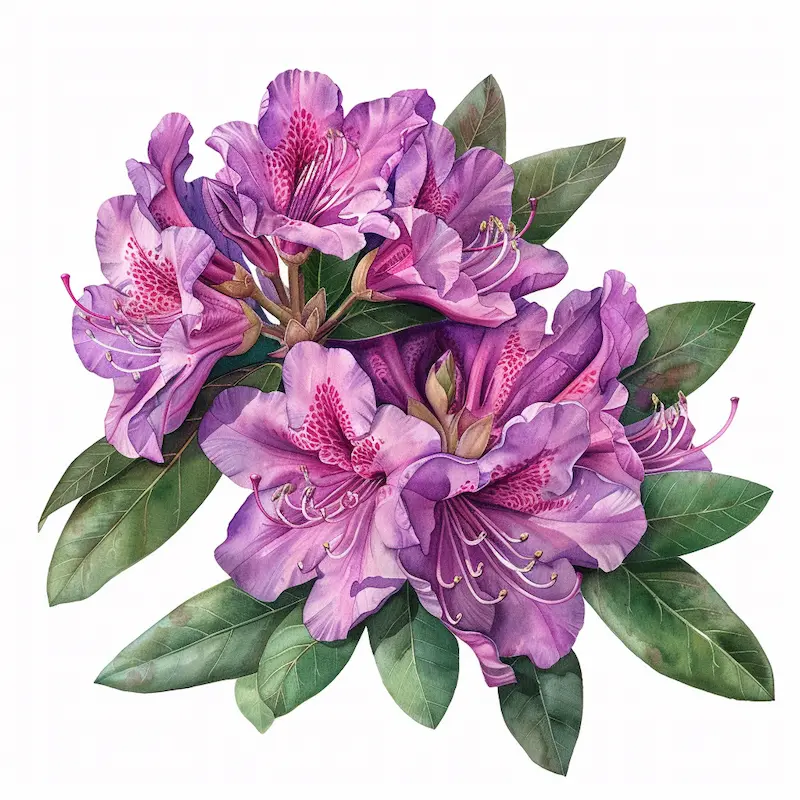
Hybrid Rhododendron is one of the most beloved ornamental shrubs in gardening, combining ease of cultivation with striking floral beauty. Hybrid forms emerged from decades of selective breeding work by European horticulturists seeking plants more resilient to temperate climates. Among the parent species are Asian and North American rhododendrons, which have bequeathed their offspring with exceptional hardiness and a diverse palette of colours.
Visually, hybrid rhododendrons impress with luxurious flower trusses that bloom from April to May in all their variety: from delicate pink and white to rich crimson and deep violet hues. The foliage is glossy, dark green, and often retains its ornamental appeal even in winter. The diversity of cultivars allows you to select plants for both compact container gardens and expansive landscape compositions. Each variety has its own character—from compact dwarfs to sprawling bushes.
In the garden, hybrid rhododendron is best positioned in partial shade, sheltered from direct scorching sunlight and strong winds. It thrives alongside azaleas, magnolias, and heathers, creating picturesque group plantings with contrasting leaf texture and successive flowering periods. The plant is particularly popular in western and central regions of Ukraine, where the climate is favourable for its development.
Interesting fact: all parts of the rhododendron contain toxic substances that can be hazardous not only to humans but also to insects and animals. Therefore, this plant should be positioned away from areas where children and pets spend time. Despite this caution, the rhododendron deserves a place in every garden as a symbol of nature's spring awakening.
Hybrid Rhododendron — planting & location
Acid-loving, evergreen foliage shrub.
How to water Hybrid Rhododendron
Never allow the soil to dry out.
Fertilizing and pruning: Hybrid Rhododendron
Carefully remove spent flower clusters.