European Larch
Larch wood becomes harder than iron when submerged in water and does not rot for hundreds of years.
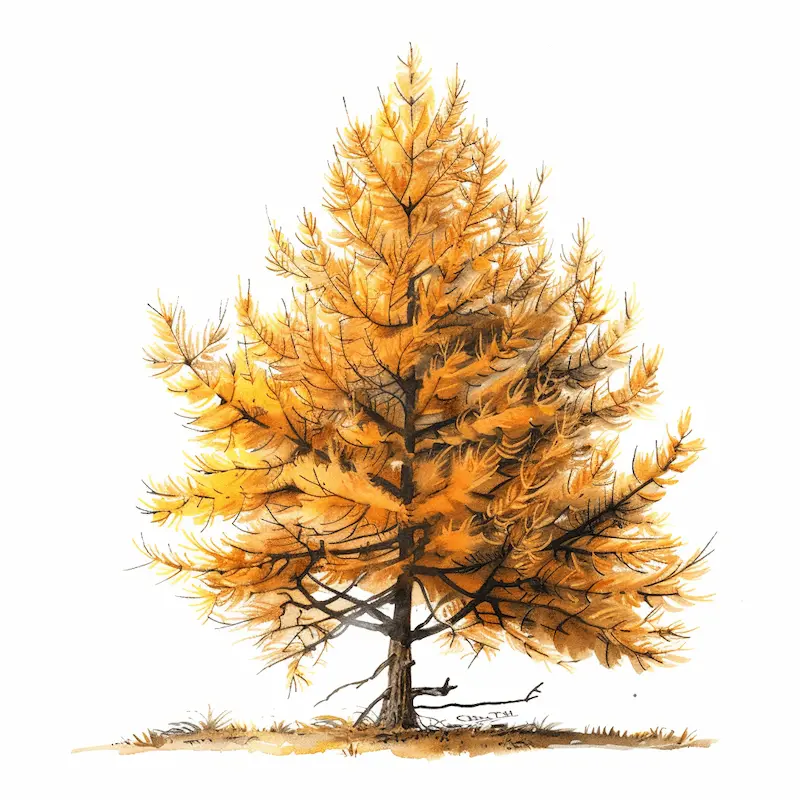
The European Larch is one of Europe's oldest cultivated coniferous trees, accompanying humanity for millennia. Unlike most of its coniferous relatives, it is deciduous: in autumn, its needles turn a magical golden hue before falling entirely, leaving branches bare until spring. This distinctive characteristic is the source of its unique charm—it brings seasonality and dynamic change to gardens, qualities we associate with deciduous trees.
Outwardly, the larch presents an impression of refined elegance with a pyramidal crown and soft, light-green needles. Yet this delicate appearance is deceptive—it is a true survivor, capable of enduring harsh conditions and strong winds. In spring months, when fresh needles emerge from the branches, the tree transforms into a genuine celebration of green vitality. Several cultivated forms of European larch exist, but the classical species form remains the most popular among gardeners for its natural beauty and reliability.
In the garden, the larch is remarkably versatile—from large parkland compositions to modest domestic plots. It pairs beautifully with standard garden elements, looking particularly striking alongside dark-green spruces and pines, against which its golden autumn stands out with special vibrancy. The plant requires virtually no attention after establishment, tolerates drought, and adapts to various soils—precisely what the busy gardener needs.
But the greatest surprise awaits you underwater: ancient Roman engineers knew the secret that larch wood in seawater becomes stronger than iron and resists decay for centuries. This very wood was used during the construction of Venetian palaces and ports. For us, this means that by planting this tree, you invest in a legacy that will outlive us all.
European Larch — planting & location
Deciduous conifer! Needles turn golden-yellow and fall in autumn.
How to water European Larch
Drought-tolerant after establishment.
Fertilizing and pruning: European Larch
Dead wood only.