Colorado Blue Spruce
The blue-grey foliage colour is protective: it reflects ultraviolet radiation in the Colorado mountains.
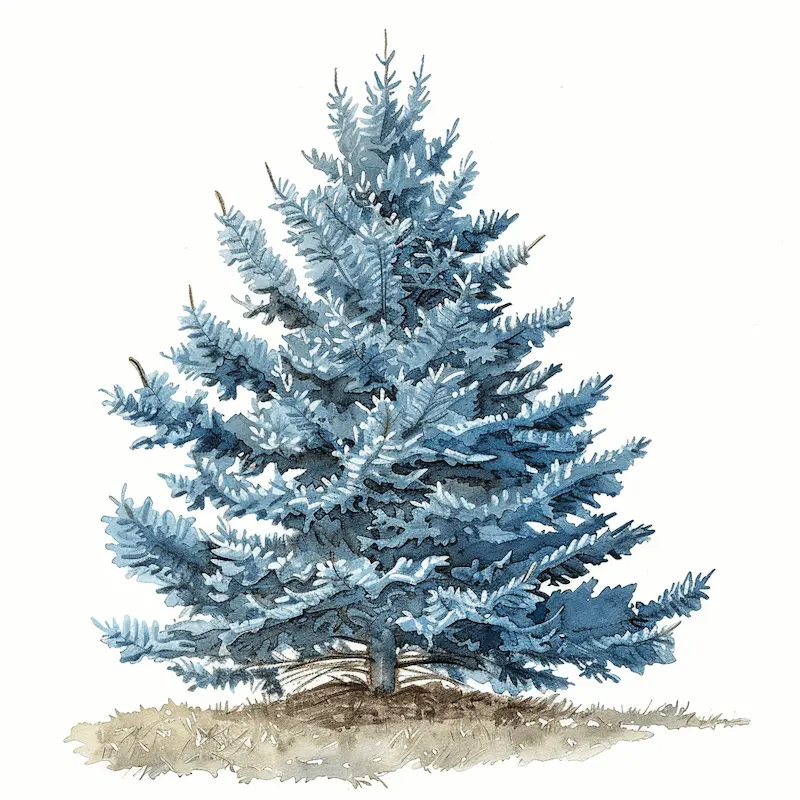
The Colorado Blue Spruce is one of the world's most popular coniferous plants, native to the mountainous regions of North America. Cultivated for over 150 years, the blue form 'Glauca' has won the hearts of gardeners thanks to its extraordinary needle colour, ranging from silvery-blue to deep blue. This is a tree or large shrub with a dense conical crown and sharp needles that truly sting if rubbed between the fingers—the origin of its species name.
The blue spruce impresses with its undemandingness: it grows peacefully in sunny locations without special care. Once planted, you can forget about frequent watering for years—mature plants tolerate drought excellently. In full sun, the needle colour becomes more vibrant, gleaming in the light and truly resembling a silvery cloud. Such conifers often enhance garden compositions with arborvitae, fir, or other evergreens, creating a striking blue palette against the green backdrop of deciduous neighbours.
A fascinating fact: the blue tint on the needles is not merely beautiful but a genuine natural adaptation. In the Colorado mountains, this colour helps needles reflect intense ultraviolet solar radiation, protecting the plant from sunscald. So each time you admire the blue shimmer of a spruce in your garden, remember: this is the result of millions of years of evolution in harsh mountain conditions.
For Ukraine, this tree is a true find, as it has acclimatised well across all regions, from north to south. Even novice gardeners can successfully grow the blue spruce: no complex horticultural techniques, minimal chemicals, maximum natural beauty. Plant one—and your garden will gain stature and depth difficult to achieve with simple deciduous trees.
Colorado Blue Spruce — planting & location
Decorative blue-grey foliage.
How to water Colorado Blue Spruce
Drought-tolerant once established.
Fertilizing and pruning: Colorado Blue Spruce
Remove only dead branches.