Giant Filbert
Hazelnut has been used by humans for around 9,000 years, with evidence dating back to Mesolithic Britain.
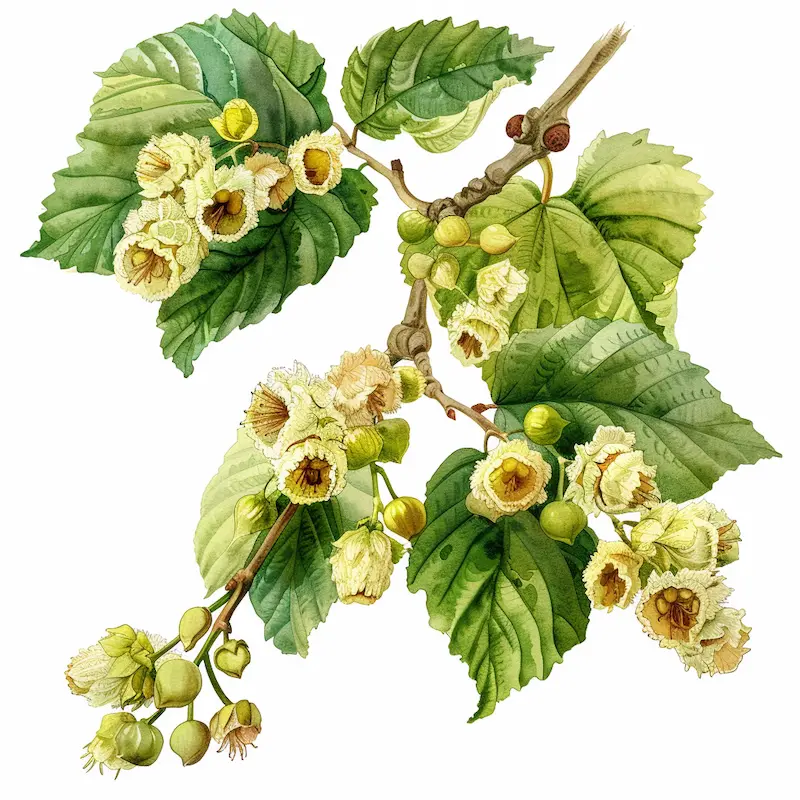
Giant Filbert, or hazelnut, is one of humanity's oldest fruit crops. Archaeological finds confirm that this plant was cultivated as far back as 9000 years ago in Mesolithic Britain. It originates from Asia Minor and South-Eastern Europe, where it still grows wild today. The 'Trapezund' variety is the result of selective breeding aimed at increasing fruit size and improving yield.
This magnificent plant is remarkably impressive in appearance: a shrub or small tree with dense, spreading crown that turns warm golden tones in autumn. Contrary to common belief, hazel flowers extremely early—from February to March, when the garden still sleeps under snow. The bright yellow, elongated catkins of male flowers are a true herald of spring's arrival. Fruits ripen in autumn: large nuts with thin shells, clustered in attractive groups, easily separating from their husks.
In the garden, Giant Filbert reveals its full potential in sunny, well-ventilated locations. It pairs excellently with other fruit crops—walnuts, apple trees and plums—creating a mixed fruit garden. Thanks to its undemanding soil requirements and moderate watering needs, hazel is successfully cultivated in the central, western and southern regions of Ukraine.
The significance of this plant far exceeds its gastronomic value. In many European cultures, hazel is considered a symbol of prosperity and abundance. If you dream of a garden that generously yields a harvest year after year with minimal care, Giant Filbert 'Trapezund' is exactly what you need.
Giant Filbert — planting & location
Large nuts with thin shells; cultivated filbert variety
How to water Giant Filbert
Moderate watering
Fertilizing and pruning: Giant Filbert
Remove root suckers and stems older than 5 years