Persian walnut
A single tree yields up to 150 kg of nuts per season—and continues to do so for 300–400 years.
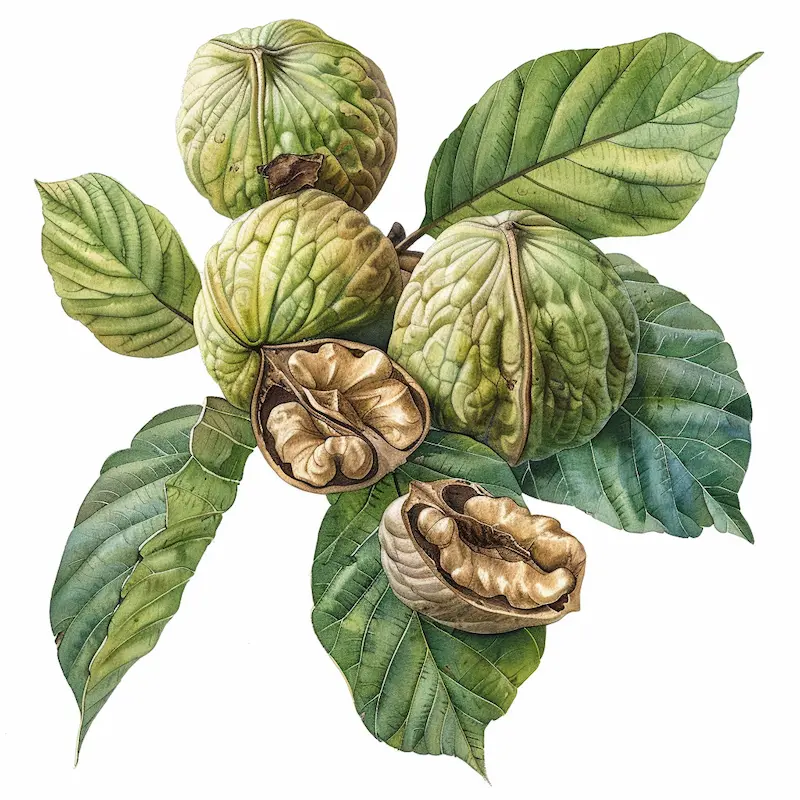
The common walnut is one of the oldest fruit crops cultivated by humanity for over three thousand years. Its native home lies in the mountainous regions of Central Asia and the South Caucasus, yet over centuries the tree has spread throughout Europe, and today it thrives as naturally in Ukrainian gardens as anywhere. This tree masterfully combines beauty with utility: a mighty silhouette, delicate feathery foliage that casts dappled shade, and generous harvests of walnuts rich in valuable fats and trace minerals.
The common walnut truly cuts an impressive figure: a large tree with a spreading crown, dense foliage, and a silvery trunk that takes on an aristocratic appearance with age. Flowering occurs in early spring—modest yet abundant flowers unfold simultaneously with young leaves. The yield is remarkable: a single tree can produce up to 150 kilograms of walnuts in a season, and the tree will bear such abundant crops for three to four hundred years. This is truly a 'family heirloom' for your garden.
In the garden, the common walnut plays the role of principal soloist: it is best planted singly in a prominent location where it has ample space to develop. It is worth noting that this tree releases substances into the soil that inhibit the growth of neighbouring plants, so companions must be chosen carefully—fruit trees and shrubs capable of competing for resources suit it best. The common walnut is undemanding in maintenance: it requires moderate watering, especially when young, and mature trees can even tolerate periods of drought.
The secret to success with this plant lies in selecting the right planting location, where it receives abundant sun and fresh air. Give it this space, and it will repay you generously with centuries of companionship and unfailing harvests. For the Ukrainian gardener, this is truly a lifetime tree.
Persian walnut — planting & location
Large tree; best as a specimen planting; can suppress neighbouring plants.
How to water Persian walnut
Mature trees are drought-tolerant.
Fertilizing and pruning: Persian walnut
Remove only dead and diseased branches.