Hazelnut
Hazelnut pollination occurs in winter: pollen is dispersed by wind at temperatures as low as –15°C.
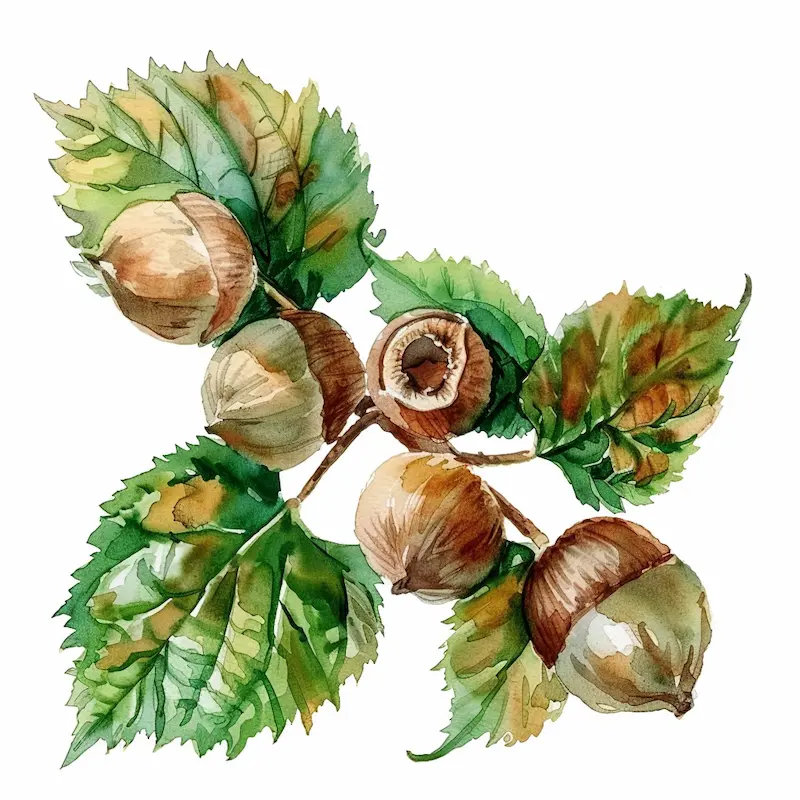
The hazelnut is one of the oldest cultivated plants, grown by humans for over three thousand years. It originates from temperate regions of Europe and Asia, where it still occurs in the wild. This deciduous shrub has adapted well to the European climate and become a favourite among gardeners throughout the continent. Unpredictable, yet reliable — this is how one might characterise the hazelnut in the garden.
Recognising the hazelnut is straightforward: it is a compact shrub with a rounded crown, smooth greyish-brown bark, and oval leaves. In early spring, before the leaves unfurl, elongated catkins appear — they begin pollinating as early as February-March in frost conditions, dispersing pollen far and wide on the wind. The nuts ripen by September-October, hidden within characteristic leafy husks that give them a distinctive appearance. There are many varieties, ranging from wild hazel to the more productive filbert — there is practically no difference in cultivation methods.
In the garden, the hazelnut is a multifunctional plant. It looks wonderful in hedgerows, group plantings, and also as a solitary accent on a lawn. Good companions include the walnut, aronia, and currant, which together create a lively, fruitful corner of the garden. The hazelnut is undemanding regarding soil, loves sunny locations but tolerates partial shade, requiring only moderate watering and light pruning of old shoots.
And here is the most interesting part: hazelnut pollination is a winter phenomenon. When frost reaches –15°C outside, the catkins suddenly 'awaken' and actively disperse pollen. This is an evolutionary strategy, as early pollination gives the tree more time for fruit development. If you have sufficient space in your garden and enjoy nuts from your own harvest, the hazelnut is the answer to your prayers.
Hazelnut — planting & location
Dense shrub, easily propagated, nuts have excellent flavour
How to water Hazelnut
Moderate watering
Fertilizing and pruning: Hazelnut
Remove 4–5 of the oldest shoots