Northern Catalpa
Catalpa leaves are three times larger than maple leaves—among the largest of all deciduous trees.
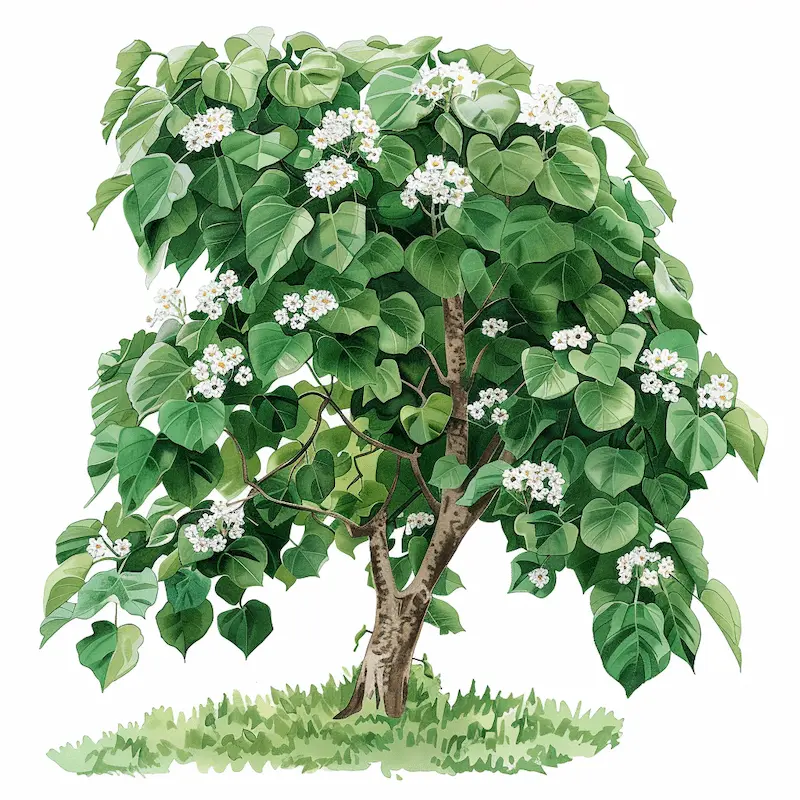
Eastern Catalpa is one of the most exotic trees that can be grown in temperate climates. Originating from the southeastern United States, it has long captured the hearts of European gardeners with its unusual appearance and luxuriant flowering. For Ukrainian gardens, this is a true treasure, bringing tropical charm to northern latitudes.
The appearance of catalpa is striking at first glance: enormous heart-shaped leaves, three times larger than those of a maple, create dense shade and convey an impression of genuine exoticism. In early summer, the tree becomes covered with clusters of white flowers adorned with yellow and violet markings—a spectacle that will captivate any gardener. After flowering, long pod-like fruits appear, adding ornamental value to the plant even in autumn.
In the garden, catalpa quickly becomes the focal point of the composition. It looks equally impressive as a standalone accent on a lawn or alongside ginkgo, tulip tree, or plane tree. The plant is exceptionally undemanding in care—moderate watering is sufficient, and it will reward you year after year. Young seedlings are best protected with protective fabric during winter, while mature trees easily tolerate Ukrainian frosts.
If you wish to create a corner in your garden where summer heat feels less oppressive and birds eagerly choose shelter, Eastern Catalpa awaits you. This tree offers not only beauty but genuine gardeners the pleasure of observing its vigorous growth and years of flowering.
Northern Catalpa — planting & location
Very large foliage, exotic appearance, decorative seed pods
How to water Northern Catalpa
Moderate watering
Fertilizing and pruning: Northern Catalpa
Remove diseased and unnecessary branches