Early Forsythia
Tolerates temperatures down to –29°C — the best forsythia for cold regions of Ukraine.
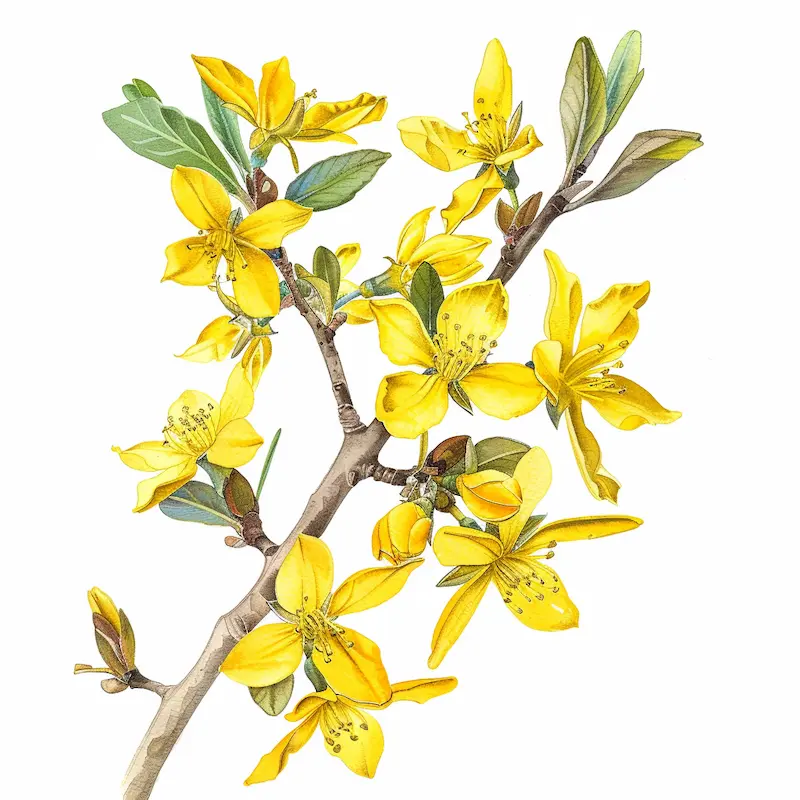
Early Forsythia is one of the most cold-hardy species among its relatives, which is why it has become beloved by gardeners in the northern regions of Ukraine. This compact deciduous shrub, native to Korea and southern Manchuria, offers us one of spring's earliest marvels: in March and April, its branches shimmer beneath waves of golden-yellow flowers that seem to kindle a warm, living spark in the still silvery garden. Unlike the more popular intermediate forsythia, this species is more compact and dense, retaining its ornamental appeal throughout the entire season.
It forms a shrub 1–2 metres tall with thin, upright stems that remain nearly inconspicuous until flowering, when they transform into true golden candles. White-flowered forms do exist, yet the classic yellow remains the most beloved. Novice gardeners should note that Early Forsythia blooms on the previous year's branches, so pruning should be done immediately after flowering—this way you will not lose next season's blooms.
This shrub is an ideal companion for hedgerows, mixed borders, and spring compositions with lilac, dogwood, and steppe almond. It is modest in its requirements: thriving in both sun and partial shade, content with ordinary garden soil, and requiring no lavish watering. Early Forsythia is a quiet star of the early spring garden, enduring frosts to –29 °C and restoring hope for warmth when its wait seems longest.
Early Forsythia — planting & location
Hardier than F. intermedia — ideal for zones 4–5.
How to water Early Forsythia
Moderate watering.
Fertilizing and pruning: Early Forsythia
Remove one-third of old stems after flowering.