Peach-Leaved Bellflower
Campanula derives its name from the Latin word for 'little bell'; there are over 300 species.
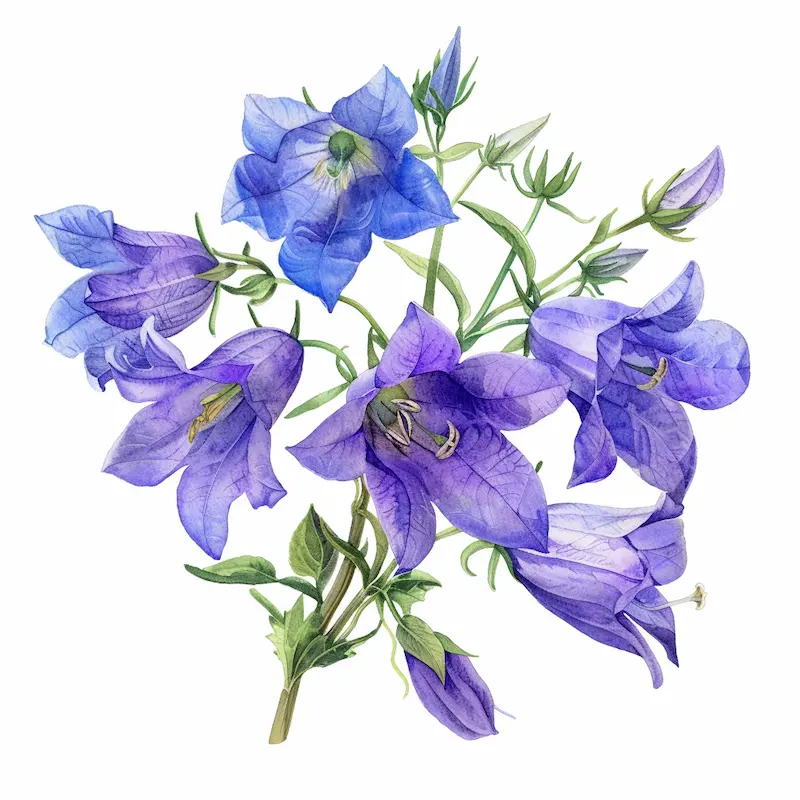
The Peach-Leaved Bellflower is one of the most beloved perennials in temperate gardens. This European beauty originates from the mountainous regions of Southern and Central Europe, where it thrives on shaded slopes and in light woodlands. For centuries, gardeners have treasured it for its reliability, longevity, and generous flowering — once planted, you can expect this charming visitor to return year after year.
The plant creates an impression of elegance through its delicate, elongated leaves, which resemble peach foliage (hence the species name). The flowers are tender bell-shaped blooms arranged in luxuriant spikes, opening throughout June and August in shades of deep blue, soft lavender, or creamy white. Plant breeders have developed a range of cultivars that expand the gardener's palette: 'Grandiflora' impresses with its large flowers, 'Alba' offers pristine white blooms, whilst dwarf forms fit perfectly into mini flower gardens.
In the garden, the Peach-Leaved Bellflower is a universal helper. It looks wonderful in mixed borders alongside grasses and other perennials, adds charm to cut flower arrangements, and creates a naturalistic atmosphere in semi-shaded garden corners. The plant is so undemanding that even novice gardeners can grow it without special tricks.
Here's an interesting detail: the bellflowers of this species frequently self-seed, providing a small bonus of young plants around the parent specimen. This makes the plant even more valuable for those who enjoy letting the garden live its own life and offer little surprises. If you seek a reliable, beautiful, and undemanding plant that steadily endures your summers and winters — the Peach-Leaved Bellflower is waiting for you.
Peach-Leaved Bellflower — planting & location
Self-seeds readily; delicate and undemanding.
How to water Peach-Leaved Bellflower
Avoid waterlogging.
Fertilizing and pruning: Peach-Leaved Bellflower
Deadhead flower stems after flowering.