Mock Orange
Often mistakenly called "jasmine"—but these are different plants.
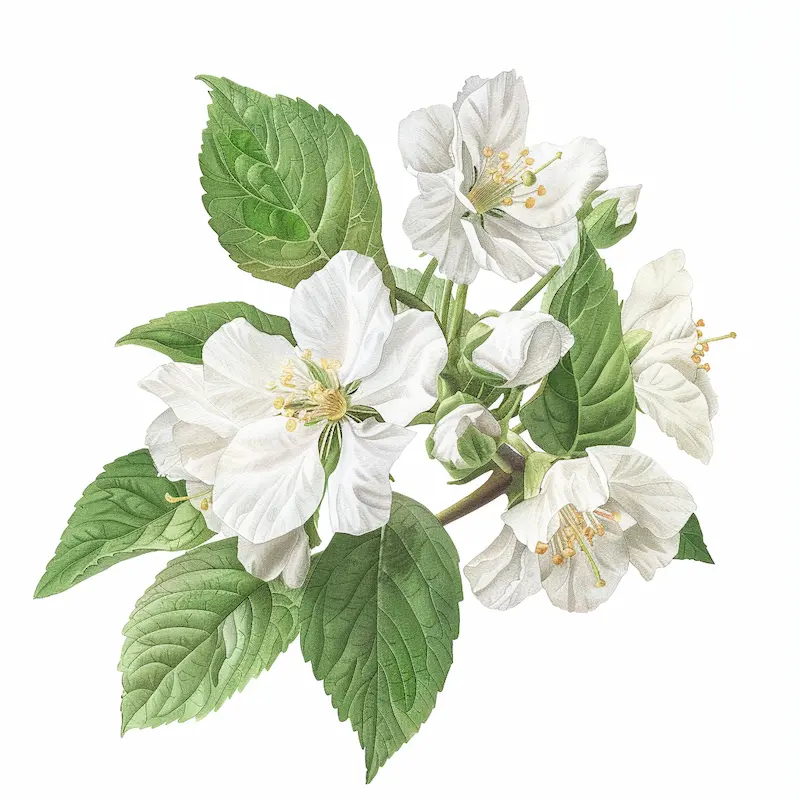
Mock Orange is one of the most beloved ornamental shrubs among gardeners, winning hearts worldwide through its undemanding nature and enchanting beauty. Its origins trace back to Southern Europe and Western Asia, where it has been cultivated for many centuries. This shrub has become a symbol of romantic old-fashioned gardens, where its white fragrant flowers tell the stories of entire generations of flower enthusiasts.
In spring, Mock Orange unfurls with simple, dark green foliage that initially goes unnoticed, but by June the entire shrub transforms into a snow-white cloud of flowers with a charming jasmine-like fragrance. The blooms are either double or single, depending on the variety, densely covering the branches. Today's plant breeders have created many interesting cultivars: from compact forms with double buds to varieties with golden foliage that changes colour throughout the season.
In the garden, Mock Orange proves to be a true all-rounder. It thrives equally in full sun and partial shade, readily accepts any soil type, and requires no constant attention. It looks magnificent in group plantings with lilac and forsythia, creating a truly festive spring bouquet. A solitary specimen is equally impressive: a lone shrub at its peak of bloom truly becomes the focal point of the entire garden.
Interestingly, Mock Orange is often mistakenly called 'jasmine', which even influenced its English name 'Mock Orange'—in reality, these are entirely different plants. Yet such confusion is easily forgiven when its distinctive, intoxicating fragrance drifts through the evening air. If you don't yet have this delightful shrub in your garden, it's time to remedy that!
Mock Orange — planting & location
Flowers once per year, with jasmine-like fragrance
How to water Mock Orange
Moderate watering
Fertilizing and pruning: Mock Orange
Remove one-third of old stems