Red Currant
The berries are rich in organic acids and antioxidants
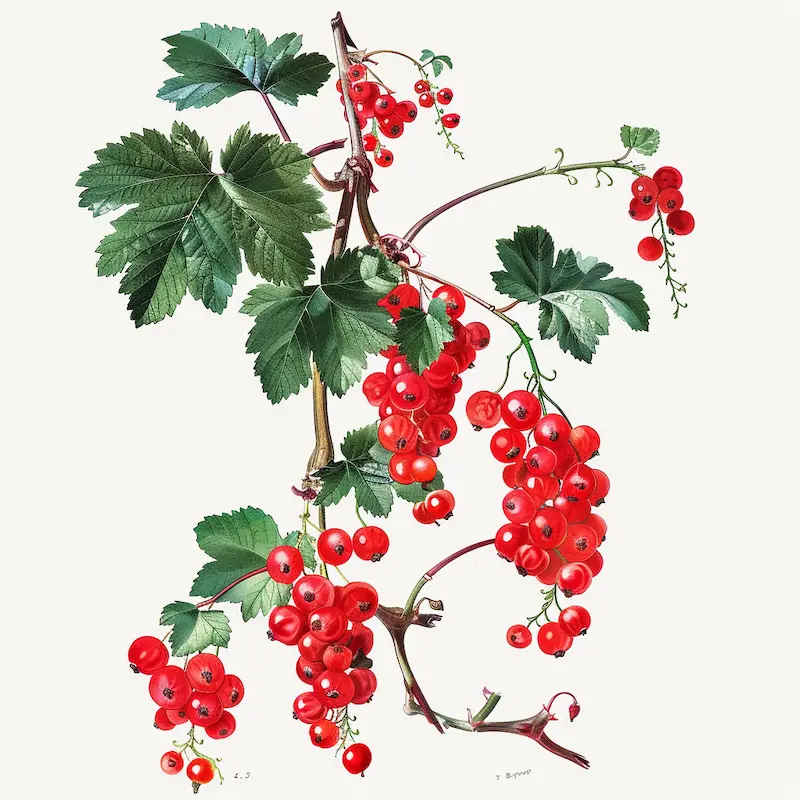
Red currant (Ribes rubrum) is a true classic of gardening that has long won the hearts of both amateur gardeners and professional chefs. Native to Europe, this plant has been cultivated in gardens for over a thousand years, prized for its wonderful berries and ease of cultivation. This undemanding shrub produces abundantly in temperate climates and tolerates weather fluctuations with remarkable resilience.
Outwardly, red currant is highly attractive: in April, the bush becomes covered with tiny greenish-yellow flowers, and in summer, translucent grape-like clusters of bright red berries hang from the branches. Experienced gardeners value the varieties for their productivity and flavour, ranging from more tart to pleasantly sweet. Unlike black currant, red currant is less susceptible to diseases and more drought-tolerant, making it ideal for cultivation in arid regions.
In the garden, red currant has many uses: it can be planted in beds as an ornamental feature, grouped with other berry plants, or arranged as a dedicated berry patch. The berries are a true vitamin treasure, rich in organic acids and antioxidants, perfectly suited for fresh consumption as well as jams, compotes and cordials.
If you are looking for a reliable plant that requires minimal attention yet delivers a delicious harvest year after year, red currant is exactly what you need. It thrives in any corner, is undemanding of soil conditions, and its fruits withstand even prolonged freezing in the refrigerator.
Red Currant — planting & location
More drought-tolerant than black currant
How to water Red Currant
Moderate watering
Fertilizing and pruning: Red Currant
Remove old branches (7+ years old)