Bird Cherry
Bird Cherry flowers for only 5–7 days and has an incredibly strong fragrance—a traditional indicator of the arrival of cold weather.
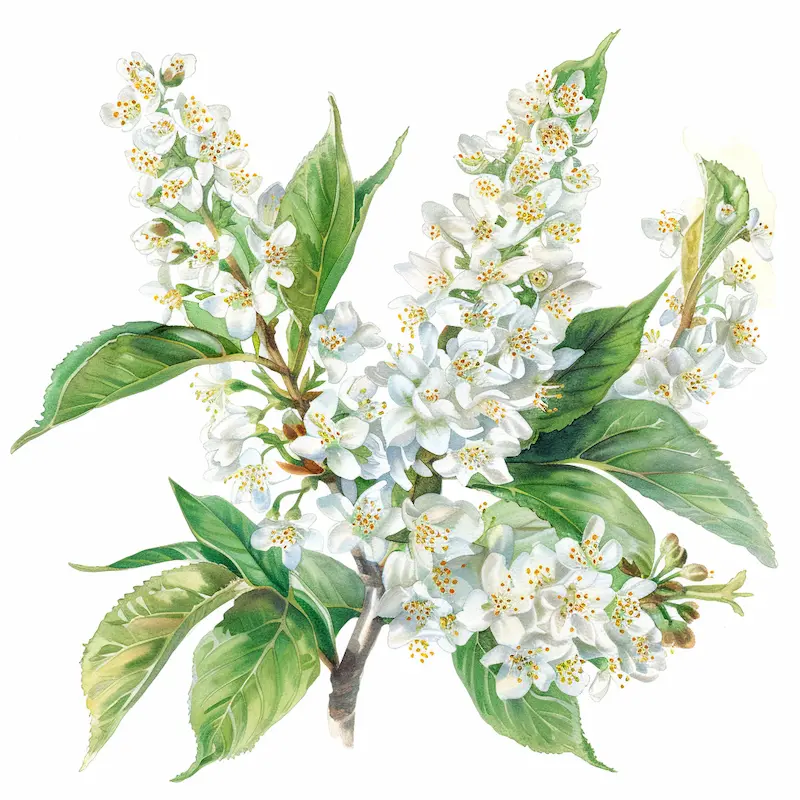
Bird Cherry is one of the most ancient fruit crops of European flora, distributed from the Atlantic coast to the Urals. This plant has accompanied humanity for millennia, serving as food, medicine, and inspiration for poets and artists. In April and May, bird cherry blooms with delicate white flowers arranged in long, elongated racemes that emit such a powerful fragrance that the aroma can be detected from hundreds of metres away. This floral spectacle begins and ends remarkably quickly—in just 5–7 days—yet this brief period is sufficient to saturate the garden with an unforgettable scent of spring. In horticulture, bird cherry is valued not only for the beauty of its flowers but also for its practicality: it is undemanding in growing conditions, naturally maintains its size, combines beautifully with other spring shrubs—rowan, viburnum, and elder—creating a living composition against the backdrop of an awakening garden.
Summer brings the gardener glossy, dark-red, almost black berries, which, though astringent in taste, possess valuable medicinal properties. Since ancient times, bird cherry has been used to treat digestive disorders, and traditional medicine recognises its tannin-rich properties as particularly beneficial for children. The berries can be dried and made into infusions and decoctions that have a deep, archaic aroma—like hot tea in an old cottage at the forest's edge.
Throughout Ukraine, bird cherry grows in all regions, from the northern Polesie to the southern steppes, testament to its universality. The plant tolerates frosts well, is undemanding regarding nutrition and watering, though it does prefer damper areas. For the gardener seeking a trouble-free fruit crop, bird cherry is an excellent choice: it yields a harvest without weeding or feeding, takes up little space, blooms abundantly, and offers long-lasting health benefits. Most importantly, it reminds us that the true beauty of plants lies in their natural character, not in horticultural artifice.
Bird Cherry — planting & location
Berries are astringent and medicinal—used traditionally for treating diarrhoea
How to water Bird Cherry
Moisture-loving plant
Fertilizing and pruning: Bird Cherry
Remove diseased and dead branches