Indigobush
Amorpha is a record-holder for honey yield in Kirovohrad and Kharkiv regions.
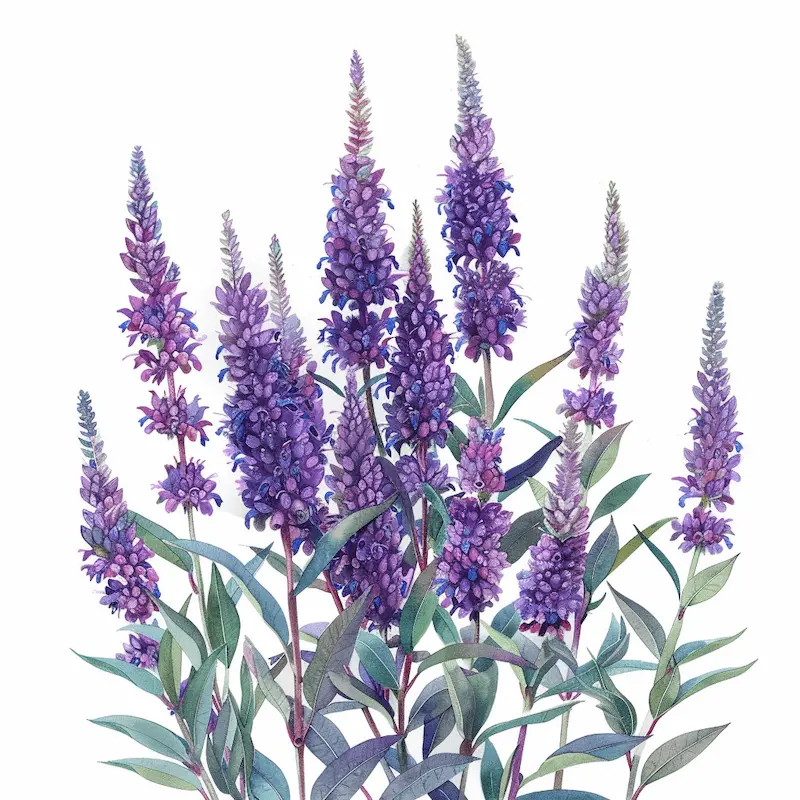
Indigobush is one of the most popular honey plants in southern Ukraine, thanks to its undemanding nature and generous flowering. This deciduous shrub originates from North America, where it served for centuries as a source of inexpensive blue dye for textiles—hence its English name, Indigo Bush. Today, Amorpha fruticosa has naturalized in many temperate climate countries and has become an integral part of the landscapes of Europe and Asia.
Identifying indigobush in the garden is straightforward: it is an attractive dense shrub with pinnately compound leaves that transform into golden and burgundy tones with the arrival of autumn. Most interestingly, its tiny violet flowers are gathered into dense, elongated racemes that open immediately after spring frosts. Unlike many "temperamental" ornamental shrubs, it tolerates drought excellently, requires no regular watering, and reproduces readily from both seeds and wild shoots.
In the garden, indigobush is a truly versatile helper. It combines beautifully with hawthorn, hazel, wild rose, and other berry-bearing shrubs, creating a vibrant, ecologically valuable living hedge. If you are seeking a plant that simultaneously provides shade from the hot sun, attracts bees and bumblebees to your garden, and requires no constant attention, indigobush is exactly what you need.
In Kirovohrad and Kharkiv regions, indigobush is rightfully called a record holder for honey productivity—a single shrub can yield up to 200 grams of natural honey per season. If you keep bees or simply have a fondness for pollinating insects, this plant will surely deserve its place in your garden.
Indigobush — planting & location
Drought-tolerant, bee plant, ornamental flower clusters.
How to water Indigobush
Drought-tolerant.
Fertilizing and pruning: Indigobush
Cut back to 30 cm from ground level annually.