Siberian Pea Shrub
This shrub survives in Siberia and Kazakhstan—where temperatures range from –40 to +40°C.
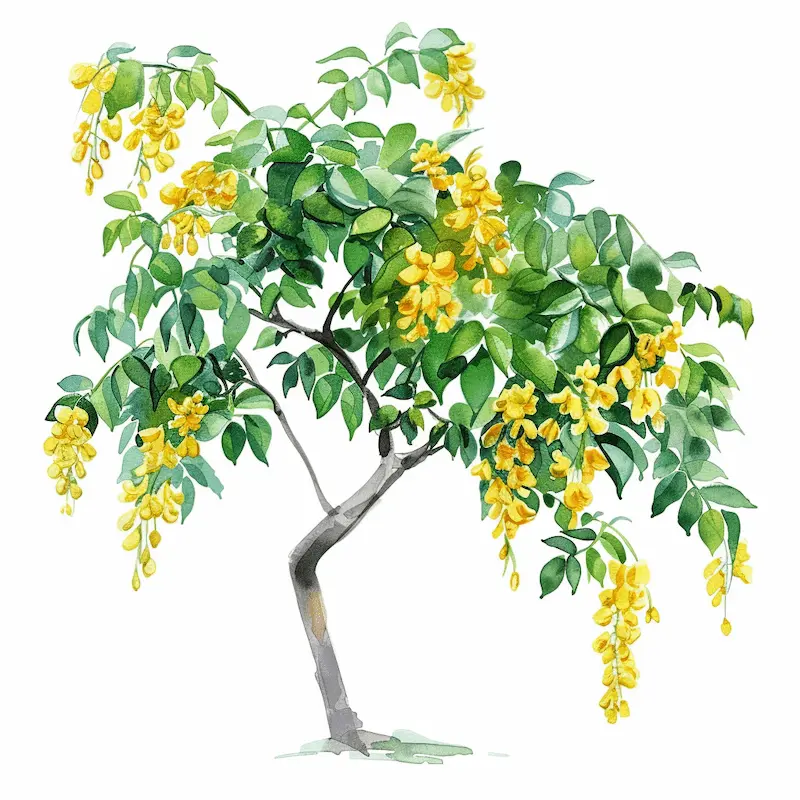
The Siberian Pea Shrub, or Caragana (Caragana arborescens), is one of the most low-maintenance plants for gardeners seeking beauty without excessive effort. This remarkable plant, native to the steppes and semi-deserts of Siberia and Kazakhstan, has long won the hearts of gardeners worldwide thanks to its incredible hardiness and spectacular spring flowering.
In appearance, Caragana is an upright tree or shrub that in May becomes covered with small yet extraordinarily bright yellow flowers. Their airy, delicate nature gives the garden a luminous, festive appearance even on the smallest plot. The plant shapes easily, making it ideal for hedges that maintain their form with minimal effort. Among ornamental varieties, you can find cultivars with weeping branches for those seeking more refined garden forms.
Caragana pairs beautifully with other steppe plants—with hawthorn, blackthorn, and wild rose, it creates harmonious compositions. Plant a sapling in a sunny location, and the plant will reward you annually with a golden festival of flowers. The soil can be almost anything, water requirements are minimal, and maintenance amounts to only occasional pruning to maintain shape.
Most importantly, Caragana is a natural nitrogen-fixer that enriches the soil independently without any fertiliser required on your part. It withstands extreme frosts and droughts, reliably serves as a nectar source for bees and butterflies, attracting beneficial insects to the garden. If you seek a plant that will generously reward simplicity and bestow beauty, Caragana is your finest choice for creating a living golden screen in garden design.
Siberian Pea Shrub — planting & location
Extremely frost- and drought-tolerant, honey plant, suitable for hedging.
How to water Siberian Pea Shrub
—
Fertilizing and pruning: Siberian Pea Shrub
Maintain hedge shape.