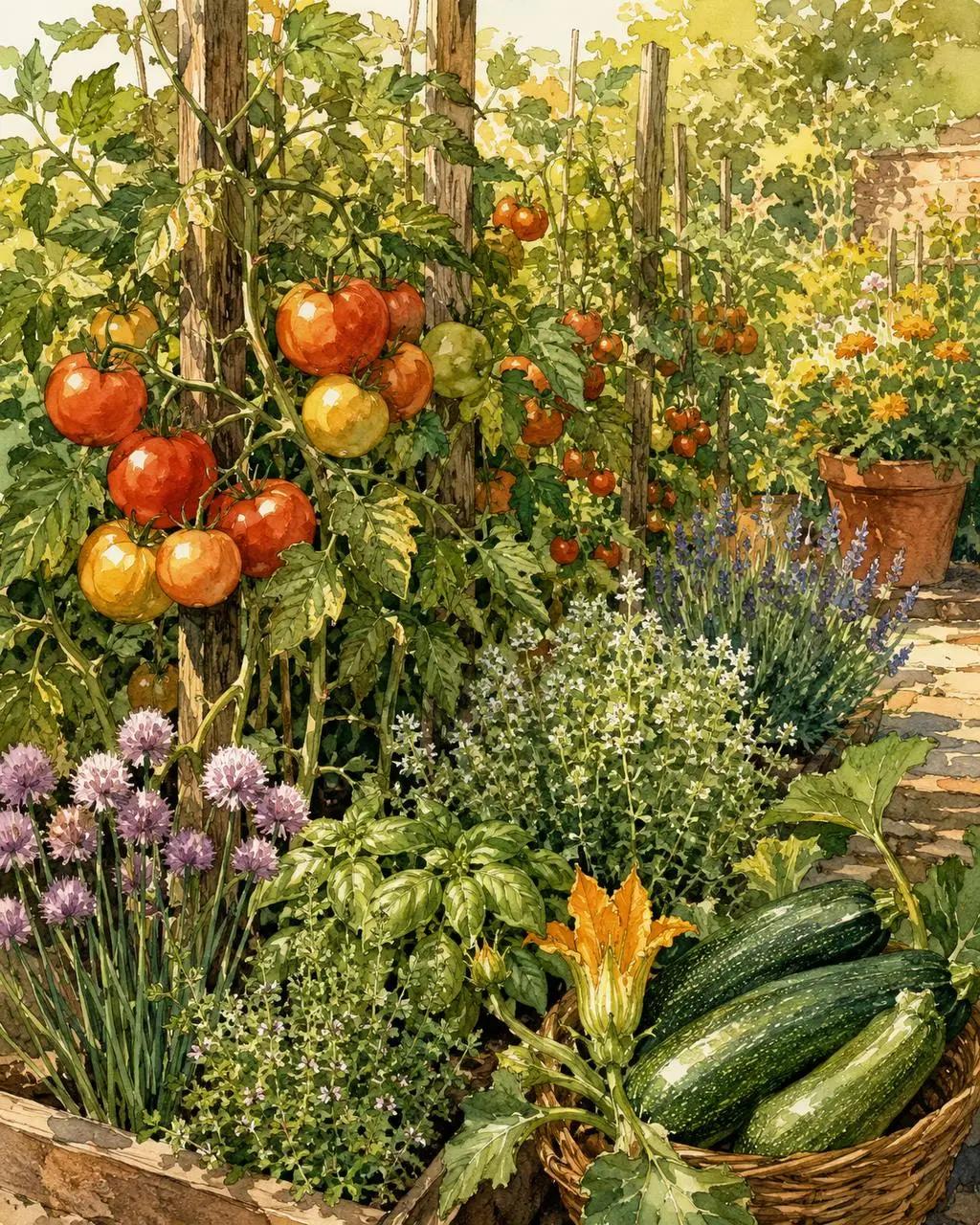
First week: garden review and heat preparation
July in the garden is a month when everything happens at once: the first tomatoes ripen, roses after their second flush need attention, and the heat demands a rethink of your usual watering routine. To avoid feeling overwhelmed by this surge of gardening tasks, a clear plan makes all the difference — not a rigid timetable, but a helpful guide to setting priorities and missing nothing important.
Begin the month with a careful walk around the entire plot — an hour spent now will save weeks of worry later. Pay close attention to the condition of the soil around your plants: if the surface has formed a hard crust, this is exactly the right moment to loosen the soil between rows and lay down a five-to-seven centimetre layer of mulch. Straw, wood chips or lightly wilted grass clippings will all do the job beautifully, locking moisture in during the hottest weeks ahead.
In the first days of July, check all the ties on climbing plants and those growing on supports — tomatoes, cucumbers and beans can outgrow their stakes within a week of vigorous growth and collapse under their own weight. While you are there, remove unnecessary side shoots from tomatoes, keeping one or two main stems, and pinch out cucumber tips once the vines have reached the top of the trellis.
Second week: roses and flowering plants at their peak
Mid-July is a critical moment for roses finishing their first or second flush. Cut spent flower clusters back to the first five-leaflet leaf, feed the plants with a potassium-phosphorus fertiliser and water generously at the base. This kind of feeding encourages the formation of new buds and strengthens the plant ahead of its autumn flowering wave.
During the same week, examine the foliage of roses, phlox and dahlias closely — summer heat combined with cool nights creates ideal conditions for powdery mildew and black spot. If you notice the first signs, treat the plants with a solution of bicarbonate of soda and a drop of liquid soap, or with copper sulphate. Acting early resolves far more than fighting a fully established disease.
Third week: harvesting and herb gathering
The third week of July typically brings the first serious harvest. Pick cucumbers, courgettes and green beans regularly — the more frequently you remove ripe fruits, the more actively the plant sets new ones. A courgette left on the plant for three or four days transforms into something closer to a marrow and drains energy from the entire bush.
This is also the ideal window for gathering medicinal and aromatic herbs: mint, lemon balm, thyme, basil and oregano. Cut stems in the morning after the dew has dried but before the midday heat sets in — essential oil content in the leaves is at its highest at this point. Bundle the herbs into small posies and hang them to dry in a shaded, well-ventilated spot, or spread them across a drying rack.
Fourth week: looking ahead to August and planning for autumn
As July draws to a close, it is worth thinking one step ahead. Look at where space is opening up as early crops are harvested — radishes, salad leaves, early cabbage. These beds can be sown with green manures such as mustard or phacelia, or prepared for planting bulbs in autumn.
If you are planning to plant tulips, daffodils or muscari in September or October, now is the right time to order or buy bulbs — the best selection disappears from sale as early as August. Store them in a cool, dry place until planting time arrives. At the end of the month, apply a foliar feed of micronutrients to fruit trees and berry bushes — this supports the formation of flower buds for next year and helps harden the wood before winter. July may be drawing to a close, but the garden has plenty more to offer before the season ends.