Pompom Dahlia
Pompom dahlias have a spherical flower shape—a perfect geometric form.
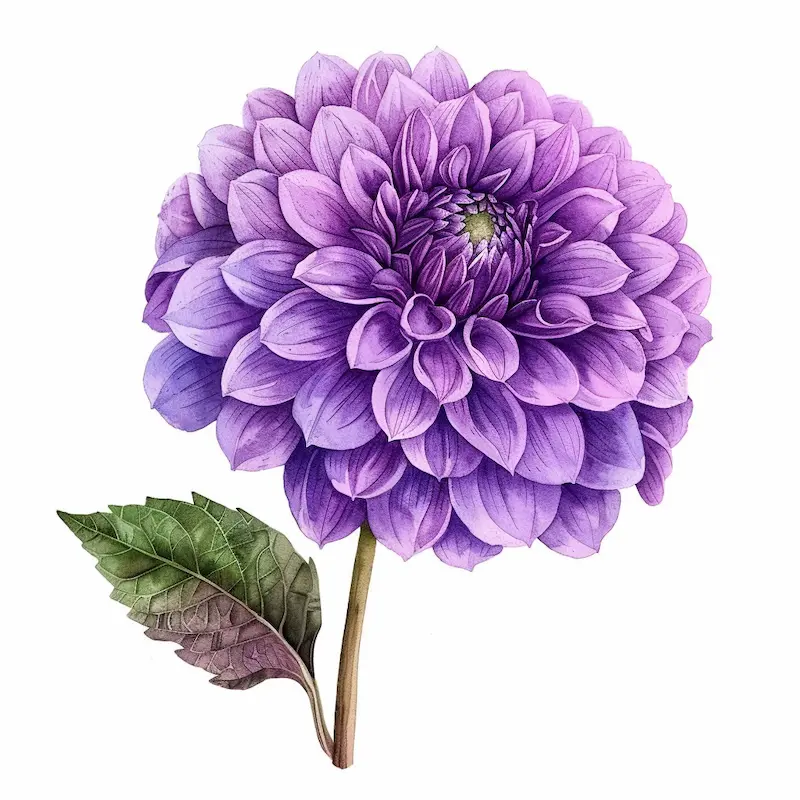
The Pompom Dahlia is one of the most popular garden forms of this genus, originating from Mexico's mountainous regions. Cultivated for more than three centuries, it only developed its characteristic spherical flower shape in the twentieth century through selective breeding. Today, countless varieties exist with a colour palette ranging from pure white to deep burgundy and violet tones, making it a favourite among flower enthusiasts worldwide.
These compact beauties attract attention with their extraordinary geometric perfection: each flower is composed of small, delicate petals carefully arranged into a perfect sphere. It blooms continuously from July until the first frosts, providing the garden with constant colour throughout the entire autumn season. Unlike larger decorative and cactus dahlias, pompom forms have a more compact habit, making them ideal for gardens of any size—from small front gardens to spacious flowerbeds.
Pompom dahlias are reliable partners in complex planting schemes. They harmonise beautifully alongside gladiolus, canna, ornamental grasses, and dwarf marigolds. Pompom varieties produce long stems, ideal for cutting, which is why they are often grown in beds specifically for cut-flower arrangements. Care is minimal: moderate watering, light pinching for bushiness, and staking during flowering—and the plant will reward you with abundant blooms.
For many gardeners, pompom dahlias have become symbols of late summer and early autumn—their appearance in the garden signals that the warmest, most colourful window of the year is approaching. They are incredibly beloved for their petals, upon which morning dew drops glisten, and they are simple to grow even for beginners.
Pompom Dahlia — planting & location
Compact form, ideal for borders
How to water Pompom Dahlia
Stake for support
Fertilizing and pruning: Pompom Dahlia
Pinch back for bushiness at the level of the third pair of leaves