Gladiolus
Record-breaking spike — 35 flowers blooming simultaneously on a single inflorescence
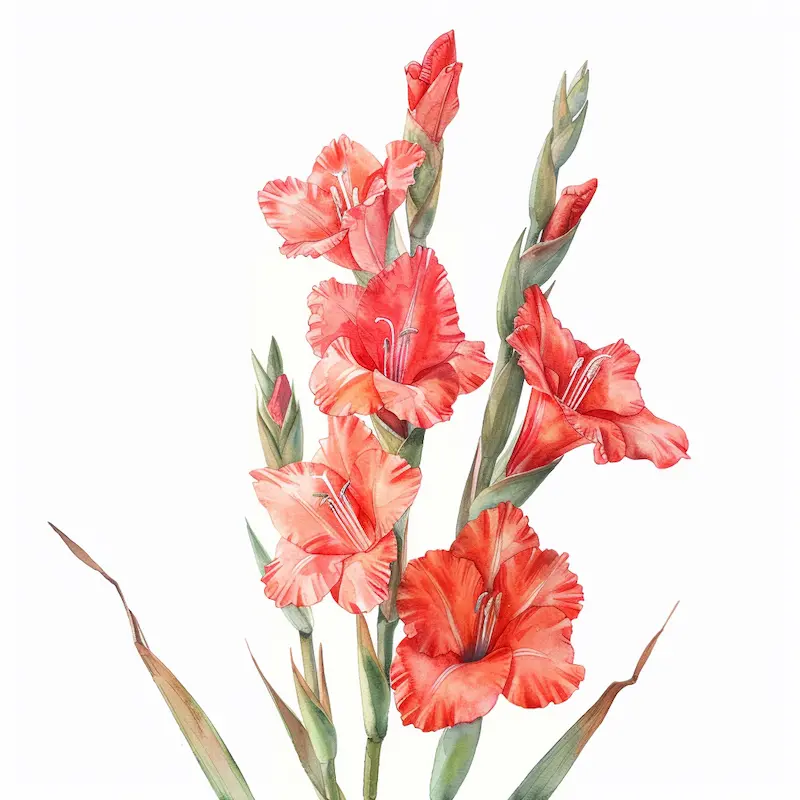
The hybrid Gladiolus is the true queen of the summer garden, bringing refined elegance to flowerbeds and bouquets. This plant emerged through centuries of selective breeding of African species and now comprises thousands of cultivars, capable of surprising gardeners with unexpected colour combinations—from subtle pastel tones to vibrant, almost neon hues. Gladiolus bulbs are dug up and stored annually, making this flower a favourite among gardeners who value crop rotation and the preservation of prized specimens.
Their distinctive feature is the spike inflorescence, where florets are arranged in a dense spiral and bloom sequentially from bottom to top. This creates an effect of slow, majestic flowering that can last several weeks. Tall, upright stems with elongated foliage serve as an ideal backdrop for other flowers, whilst appearing architecturally complete in their own right. Modern hybrids range from compact (60–80 cm) to true giants (up to 150 cm), giving gardeners complete freedom in composition planning.
In the garden, Gladiolus is indispensable for both cut flowers and for adorning beds and mixed borders. It pairs well with roses, lupines and annuals, adding vertical dynamism to compositions. Flowers remain fresh for several weeks in a vase, making them a favourite with florists. The flowering period spans July to September, covering a time when many other classic flowers have already faded.
Interestingly, a record Gladiolus spike displayed 35 flowers in simultaneous bloom—a testament to how generously this plant rewards with beauty. Achieving such results requires regular feeding and careful winter storage of bulbs, but believe us, the result is well worth the effort.
Gladiolus — planting & location
Corm-forming, lifted annually
How to water Gladiolus
Avoid drying out during flowering
Fertilizing and pruning: Gladiolus
Cut back to 10 cm before lifting corms