Canna Lily
Canna leaves were historically used to make gloves and packing material.
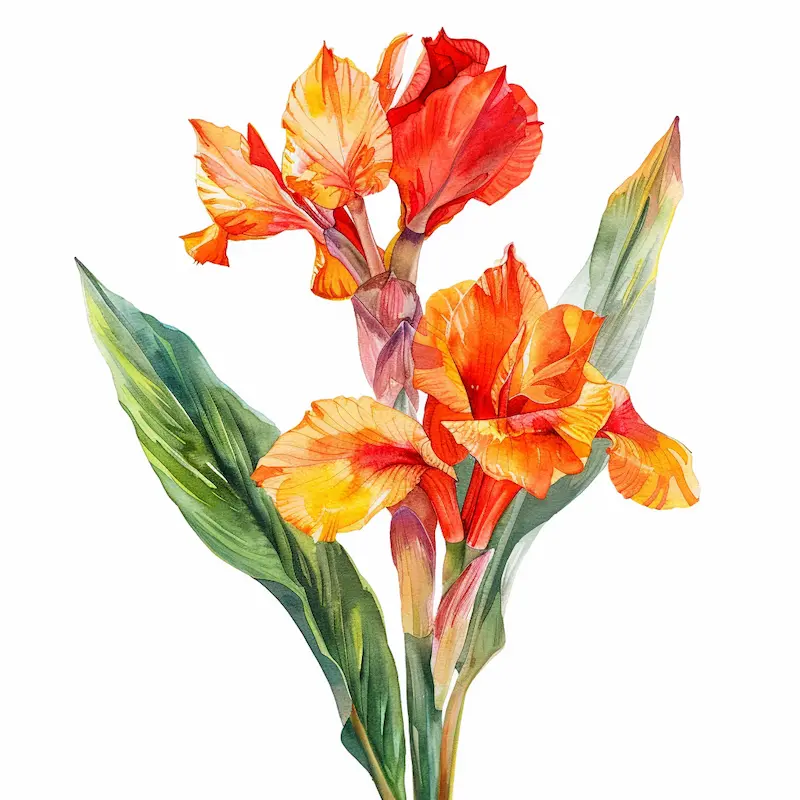
Canna lily is a true queen of the tropical garden, bringing exotic charm even to temperate climates. This magnificent perennial hails from South America and has delighted gardeners for over two centuries with its spectacular blooms and regal stature. Modern hybrids (Canna × generalis) are the result of meticulous breeding work, combining the finest qualities of wild species into one versatile plant.
The canna impresses with its striking architecture: large, elliptical leaves—from vibrant green to deep burgundy—form dense clusters crowned with inflorescences in shades of red, yellow, orange, and pink. Canna flowers open successively throughout summer and autumn, beginning in July. The diversity of cultivars—from compact forms to towering giants—allows gardeners to select a plant to suit any taste and location.
In landscape design, canna holds a special place: it excels as a specimen plant on the lawn, as a backdrop for dwarf flower combinations, or as a striking focal point near water features. As a moisture-loving plant, it thrives near ponds and even small wetland areas. Canna combines ornamental foliage and flowers, remaining attractive throughout the season even when blooms are temporarily absent.
A fascinating history: canna leaves were frequently used for practical purposes—crafted into gloves, protective packaging for fragile goods, and even employed in food processing. This reminds us that this exotic beauty is not merely a garden ornament, but a plant with rich cultural heritage. If you wish to add a touch of tropical magic to your garden, canna awaits you.
Canna Lily — planting & location
Tropical appearance; rhizomes must be stored over winter
How to water Canna Lily
Prefers moist soil
Fertilizing and pruning: Canna Lily
Cut foliage back to 15–20 cm before digging up