Rocky Mountain Juniper
Native to the rocky mountains of the USA, this species exhibits exceptional hardiness.
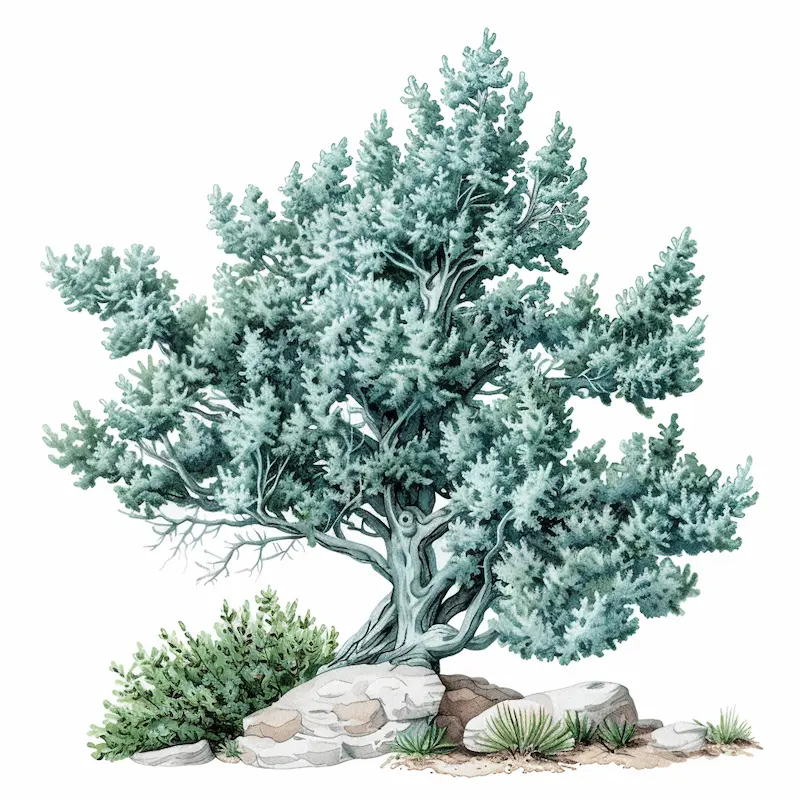
Rocky Mountain Juniper is a hardy inhabitant of coniferous gardens, native to the rocky mountain landscapes of the USA. It is from these challenging environments that it has acquired its remarkable ability to withstand extreme conditions: drought, strong winds and stony soils. Cultivation of this plant in gardens began in the twentieth century, and today it is beloved by gardeners worldwide for its reliability and minimal demands.
Rocky Mountain Juniper is easy to identify: its characteristic columnar or conical form with dense foliage looks architectural and noble. The plant's foliage can be either blue or grey depending on the cultivar, allowing you to choose the optimal option for your garden composition. Among the many available varieties, you can find both compact forms for small gardens and tall, narrow cultivars for creating vertical accents.
In garden design, Rocky Mountain Juniper is an indispensable asset. It pairs beautifully with arborvitae, fir and common juniper, creating harmonious coniferous group compositions. It can be planted in alpine rockeries, along garden paths, in containers and as a standalone accent feature. The plant is equally appreciated in formal gardens and natural landscape compositions.
What truly sets Rocky Mountain Juniper apart in the coniferous world is its practical undemandingness. Once established, it requires minimal watering, is rarely troubled by diseases and pests, and its evergreen foliage remains beautiful even in the snowiest winters. If you are seeking a plant that will enhance your garden for many years without special care, Rocky Mountain Juniper is an excellent choice.
Rocky Mountain Juniper — planting & location
Blue or grey foliage; columnar or conical form.
How to water Rocky Mountain Juniper
Drought tolerant.
Fertilizing and pruning: Rocky Mountain Juniper
Remove dead branches.