Sour Cherry
Harvest: late June–July; berries do not store long — process quickly.
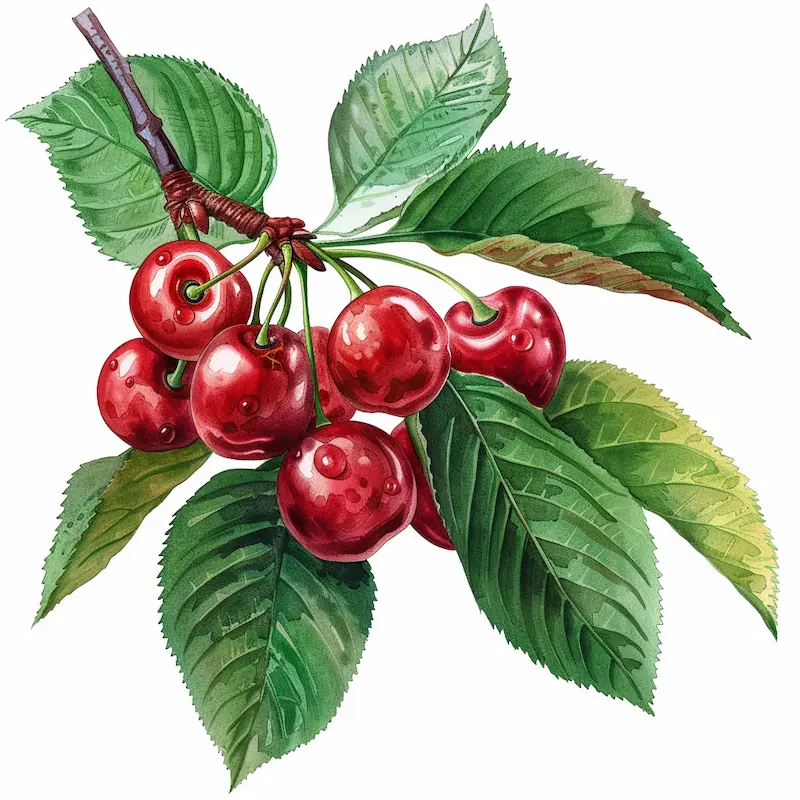
Sour cherry is one of humanity's oldest fruit crops, having accompanied civilisation for over three millennia. Originating from regions of Asia Minor and the Caucasus, it has long been favoured in Ukrainian gardens, thriving across various climatic zones. It is a hybrid of wild bird cherry and sweet cherry, deliberately developed by people to create a more undemanding and winter-hardy plant.
In the garden, sour cherry forms a compact tree with a spreading crown, clothed in delicate clouds of white blossoms in April and May—a true treasure for bees and other pollinators. The fruit ripens in late June or early July, developing a handsome red colour and characteristic sweet-tart flavour. Varieties differ in both acidity intensity and fruit size: some are better suited for preserving, while others are pleasant eaten fresh.
In the garden, sour cherry pairs well with plum, apple and other fruit crops, occupying considerably less space than a large apple tree. It is an ideal plant for smaller plots and urban gardens, where every square metre is precious. The harvest should be processed without delay—preserved as jam, compote, or frozen—as fresh fruit stores only briefly.
If you seek a plant that demands minimal attention yet generously rewards with fruit, sour cherry is precisely what you need. It manages well with moderate watering, requires no constant feeding, and delivers reliable harvests year after year.
Sour Cherry — planting & location
Tart-sweet berries, self-fertile.
How to water Sour Cherry
Important to water during fruit ripening.
Fertilizing and pruning: Sour Cherry
Remove spent, diseased and crossing branches.