Weeping Willow
Willow is a symbol of sorrow and resilience: it withstands both floods and drought simultaneously.
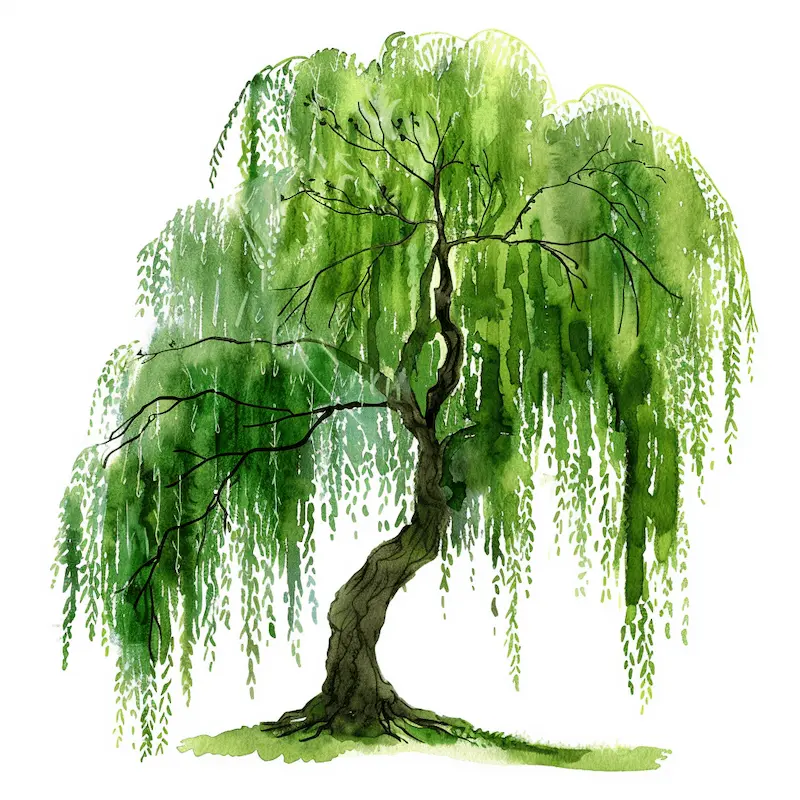
The weeping willow is one of the most romantic plants in garden architecture, having inspired artists and poets for centuries. Originating from the south-eastern regions of Asia, it has become so naturally established on the banks of rivers and lakes throughout Europe and North America that it has become an integral part of our vision of the classical landscape. In the eighteenth century, the weeping willow gained extraordinary popularity when English and French gardeners chose it as a symbol of the sentimental landscape style they were implementing worldwide.
Identifying the weeping willow is simple—its delicate, graceful branches, resembling golden threads, hang almost to the ground, creating an effect of gentle, barely perceptible melancholy. Gardeners can choose between full-sized tree forms and more compact cultivars, ideal for smaller gardens. Particularly striking in spring, when soft, silvery catkins burst forth on its branches—a true celebration after winter. In autumn, the foliage takes on warm golden tones, and in winter, the bare branches draw graphic, almost Japanese silhouettes against the sky.
This plant is the queen of moist locations and thrives best near water with constant, generous moisture. However, the weeping willow proves grateful even in less ideal conditions if provided with a sunny position and sufficient light to develop its elegant branches. It tolerates pruning, though its natural form is usually most striking and requires no intervention.
Fascinating is the history of its Latin name—"babylonica," which actually stems from a botanical error: naturalists mistakenly associated this Asian beauty with Babylon. Yet it was a fortunate mistake—it only intensified the romanticism and mystery surrounding this plant. If you have the opportunity to plant a weeping willow near a water feature, do so without hesitation: it will bestow peace and beauty upon generations of gardeners.
Weeping Willow — planting & location
Decorative weeping branches, best located near water.
How to water Weeping Willow
Growth only occurs with consistent soil moisture.
Fertilizing and pruning: Weeping Willow
Shorten long branches that touch the ground.