Lombardy poplar
Poplar absorbs CO₂ ten times faster than any other tree in Ukraine.
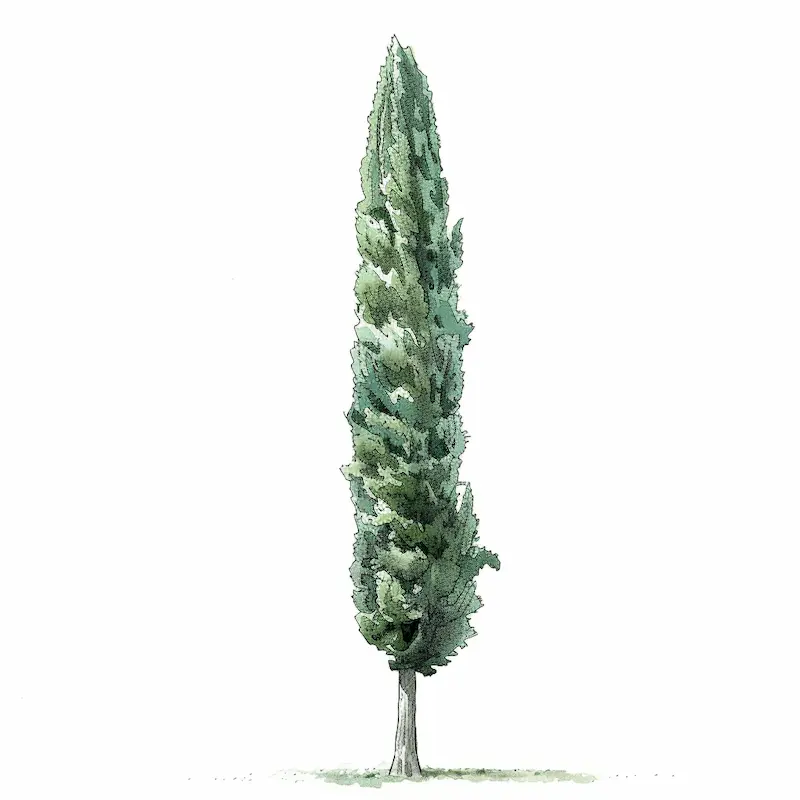
The Lombardy poplar is one of the most recognised ornamental forms of black poplar, which emerged in Italy as early as the eighteenth century. This tree rapidly captured the hearts of gardeners throughout Europe and subsequently spread across the world. Its origin is precise: it is a clone discovered in the early days near the River Po, and its columnar form is transmitted only through cuttings, making each tree an exact copy of the mother plant.
The defining characteristic of the Lombardy poplar is its almost geometric vertical silhouette, which imparts it with a unique architectural charm. Unlike its sprawling cousins, the branches of this tree grow densely towards the trunk, creating a narrow, slender profile. In spring, the tree is covered with small reddish flowers, which appear subtly, and subsequently develop into bead-like catkins. The foliage is diamond-shaped, light green, and rustles in the wind with the slightest breeze.
In the garden, the Lombardy poplar becomes a genuine focal point—plant it individually for a dramatic effect or in rows along paths and fences to create a living screen from neighbours. It coexists easily with willows, birches and maples, yet shines brightest in a solo performance through its very slenderness. The tree is undemanding regarding soil, but loves sunny locations and adequate watering, particularly in the first years after planting.
The Lombardy poplar is a champion in absorbing carbon dioxide, doing so ten times faster than other trees in Ukraine. This makes it not merely beautiful, but also an ecologically valuable plant for cities and private gardens. If you seek a tree that looks noble, grows rapidly and brings genuine benefit to the surrounding environment—the Lombardy poplar awaits you.
Lombardy poplar — planting & location
Distinctive vertical columnar form
How to water Lombardy poplar
Young plants require frequent watering
Fertilizing and pruning: Lombardy poplar
Remove dead branches