Yarrow
Achillea is named after Achilles, who is said to have used it to heal soldiers' wounds.
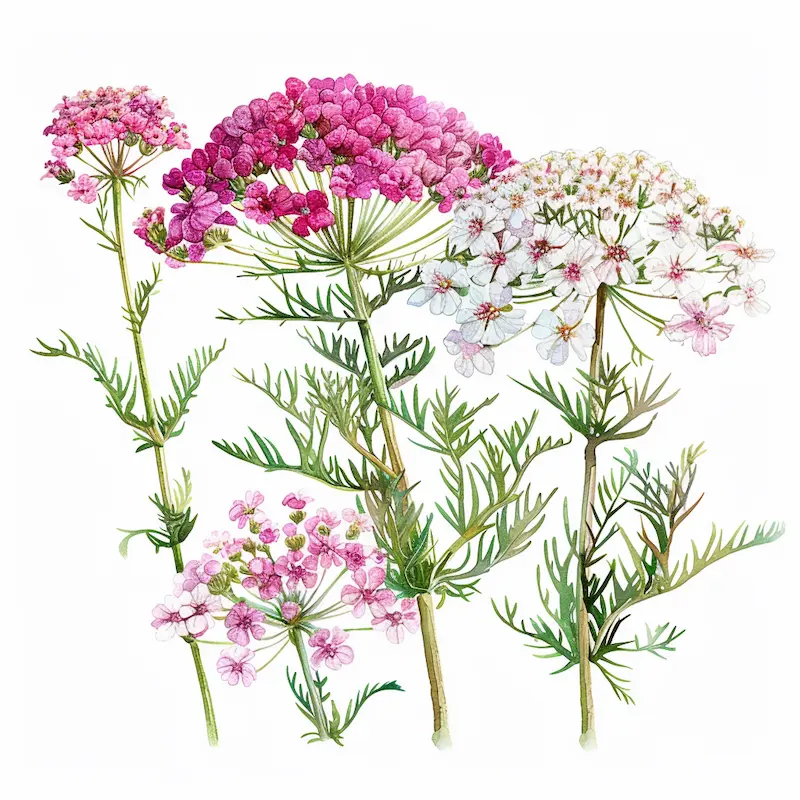
Yarrow is one of the most popular plants in gardens, beloved by gardeners for its low maintenance requirements and prolonged flowering period. This perennial beauty originates from Europe and the temperate regions of Asia, but has long since become a 'universal helper' for gardens worldwide. It tolerates drought easily, thrives in poor soils, and is virtually disease-free — an ideal plant for those just beginning their gardening journey.
Yarrow is easily recognisable by its appearance: fine, almost fern-like leaves gave the plant its English common name, and clusters of tiny flowers, tightly packed into flat or slightly curved flower heads, bloom tirelessly from June through August. Modern cultivars offer a wonderful range of colours — from classic white and soft pink to vibrant red and warm golden tones. Each variety retains the same undemanding character, so your choice depends solely on your taste and garden design.
In the garden, yarrow is a universal solution for any occasion. It looks magnificent in complex compositions on sunny borders, creates a natural edging, holds beautifully in cut flowers (blooms don't wilt for months), and attracts bees and butterflies. If you're seeking a plant that requires minimal attention yet delivers maximum beauty and benefit, yarrow is your choice. It's no wonder that in traditional medicine it's called the 'healing herb', and ancient warriors carried it on campaigns to treat their wounds.
Yarrow — planting & location
Medicinal, bee plant, drought-tolerant.
How to water Yarrow
Tolerates drought for up to two weeks.
Fertilizing and pruning: Yarrow
Cut back to 5–7 cm in autumn.