European aspen
The leaves tremble even in windless weather thanks to their specially flattened petioles, creating a characteristic rustling sound.
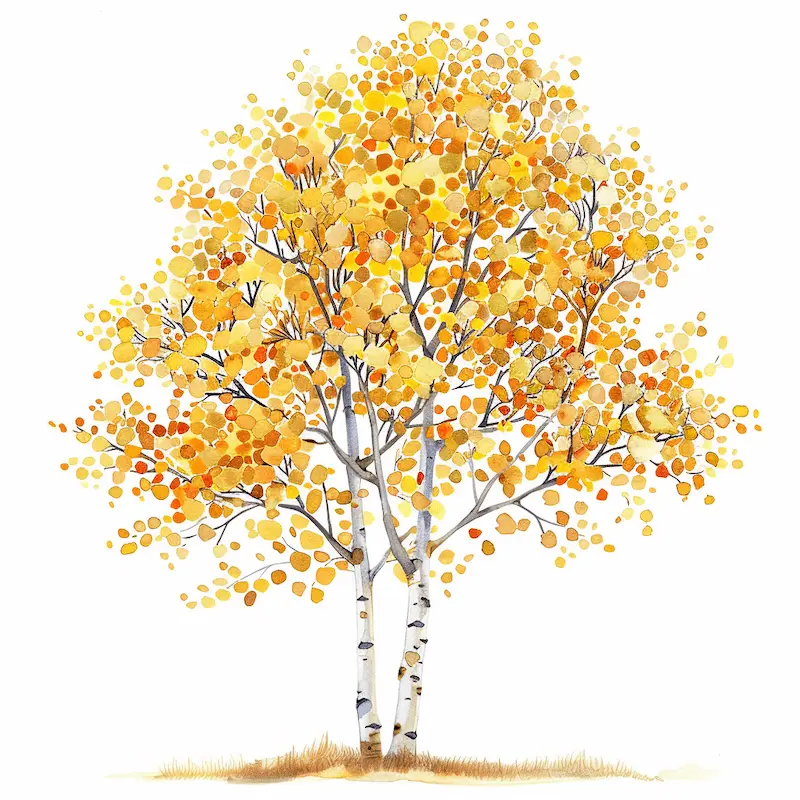
European aspen is one of the fastest-growing trees in its native range, originating from the forests of Europe and Asia. It has long been valued by gardeners both for its dynamic beauty and its low-maintenance character. From March to April, the tree delights with small catkin flowers, but its true magic unfolds in the foliage—delicate, trembling leaves dance in the breeze with a characteristic pleasant rustling sound.
The internal leaf structure makes aspen unique: the leaf petioles are flattened in the horizontal plane, so the foliage trembles even in windless weather, lending the crown a lively, dynamic appearance. The trunk is slender and upright, with smooth greenish-grey bark that darkens with age. The crown is naturally open and ellipsoid, making the tree airy and light in appearance.
In horticulture, aspen plays an excellent role as an accent tree or background planting in sheltered garden corners. It combines easily with birch, willow, and other poplars, creating natural landscape compositions. Thanks to its adaptability, the plant thrives equally well in sunny locations and partial shade, making it versatile for gardens of varying sizes and styles.
This tree is a true symbol of spring in northern latitudes. If you seek a tree that will bring dynamism, natural grace, and the enchanting sound of rustling leaves to your garden, aspen awaits you. Its presence instantly transforms an ordinary corner into a living, breathing space.
European aspen — planting & location
Leaf trembling in the breeze creates the characteristic rustling sound of aspen
How to water European aspen
—
Fertilizing and pruning: European aspen
Remove only dead and diseased branches