Japanese Pagoda Tree
Flowers latest among deciduous trees—in August–September, when others have already finished flowering
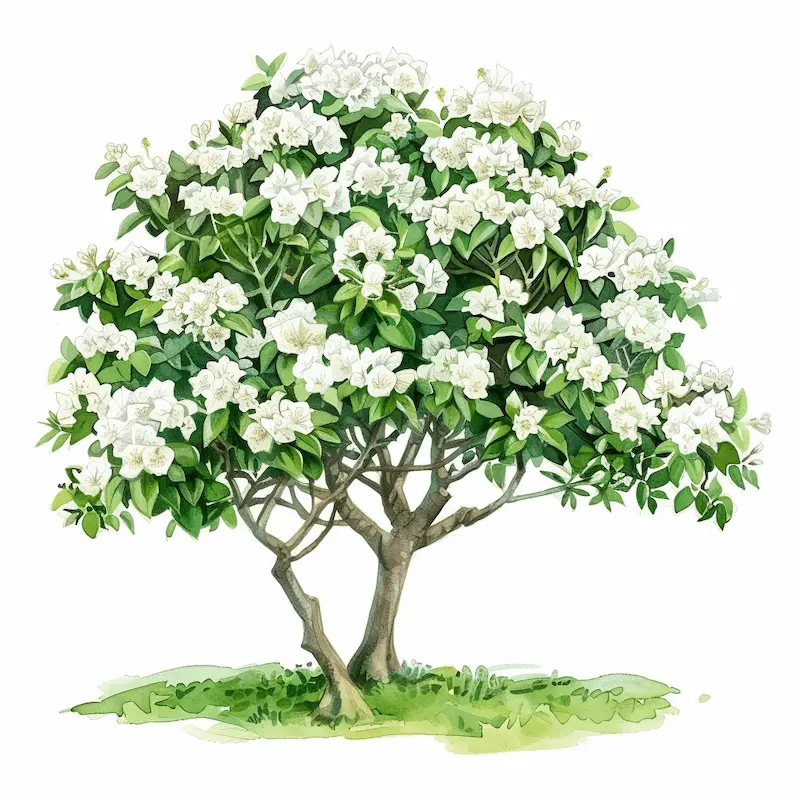
The Japanese Pagoda Tree is a true queen of autumn gardens, offering its enchanting flowers when most trees have long entered their dormant period. This deciduous tree originates from China and Japan, where it has been revered for many centuries, recognised as a symbol of longevity and wisdom. It arrived in Europe in the eighteenth century and has since won the hearts of gardeners with its extraordinary beauty and undemanding nature.
Simple and elegant—these are the defining characteristics of the Japanese Pagoda Tree. Its branches are clothed in pinnate foliage, creating a soft, airy crown, and in late summer the tree bursts into flower with panicles of delicate cream-white blooms that appear almost fantastical against the green foliage. Flowering begins in August and continues through September, filling the air with a delicate, sweet fragrance. In some gardens, one can find more compact cultivars of the Japanese Pagoda Tree, which are excellent for smaller spaces, though the classical forms grow into impressive specimens.
In the garden, the Japanese Pagoda Tree is versatile and sociable. It combines beautifully with clerodendrum, butterfly bush and other late-flowering plants, creating compositions that remain attractive until the frosts arrive. It is a reliable source of nectar—during flowering, the tree becomes a veritable paradise for bees and butterflies when food is scarce elsewhere. After flowering, interesting seed pods develop, adding to the tree's summer character.
If you seek a tree that requires little ongoing attention, one that is reliable even in drought and undemanding of soil conditions—the Japanese Pagoda Tree is your ideal choice. This is a plant that rewards the gardener with beauty, asking little in return, and delights with its flowers when the rest of nature is preparing for winter sleep.
Japanese Pagoda Tree — planting & location
Late-flowering, premium honey source, August–September nectar plant
How to water Japanese Pagoda Tree
Drought tolerant once established
Fertilizing and pruning: Japanese Pagoda Tree
Remove only dead and diseased branches