Hungarian Prune
The fruit is processed into prunes: with proper drying, they store for 1–2 years.
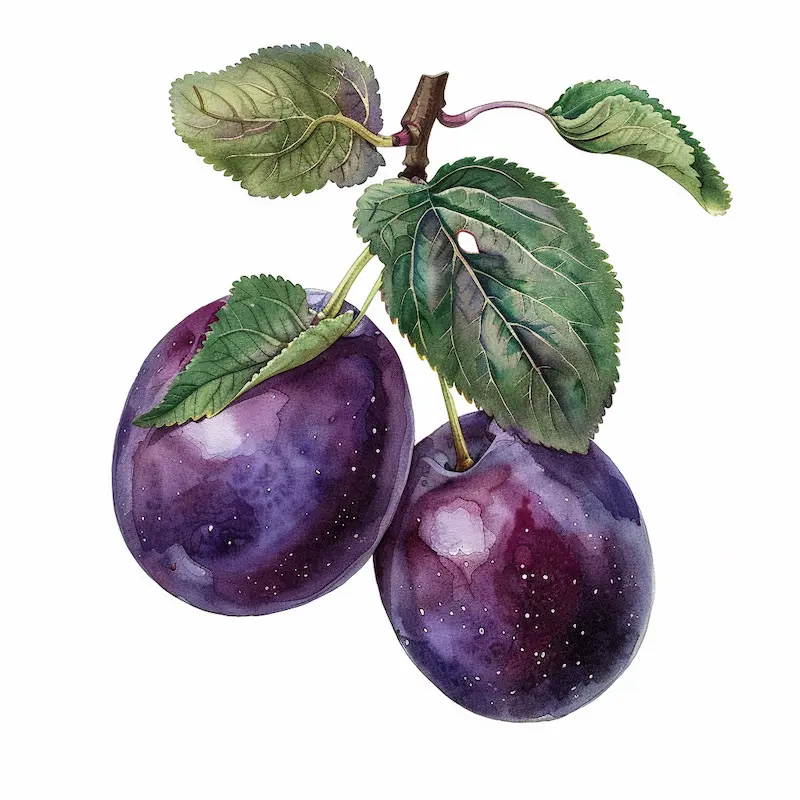
The Hungarian Prune is one of the oldest cultivated plums, originating from the Near East and gaining popularity in Europe as far back as the Middle Ages. This variety earned its name thanks to Hungarian gardeners who perfected it and made it a symbol of their fruit-growing heritage. Today, the Hungarian Prune remains one of the most respected plums for industrial prune production, as it delivers the rich flavour and consistency valued worldwide.
The Hungarian Prune is a refined yet robust plant. In April and May, it becomes cloaked in a cloud of white blossoms that promise an abundant harvest. The fruits are dark violet, sometimes almost black, with a natural silvery bloom and golden flesh inside. The variety is self-fertile, so a single tree is sufficient for good fruiting, though proximity to an apple tree, cherry, or another plum will yield an even more generous crop. Its high natural hardiness makes this variety a reliable choice for gardens across different regions.
In the garden, the Hungarian Prune is a versatile plant. Beyond providing fresh fruit in summer, it integrates beautifully amongst other fruit trees, creating a harmonious fruity landscape. Yet the true magic of the Hungarian Prune unfolds in drying: the fruits transform into prunes—those delicious, meaty and nutritious specimens that travel the world in bags and boxes.
If you wish to have a garden that offers not only fresh fruit but also the opportunity to preserve the harvest for winter enjoyment, the Hungarian Prune is your choice. It is a plant that works for you: easy to grow, prolific in fruiting, and its fruits can be transformed into a treasure that will await you for many months.
Hungarian Prune — planting & location
Classic prune variety, self-fertile, frost-hardy
How to water Hungarian Prune
Regular watering
Fertilizing and pruning: Hungarian Prune
Thin the crown