Crown Imperial
Crown Imperial bulbs are planted in gardens to deter moles and mice.
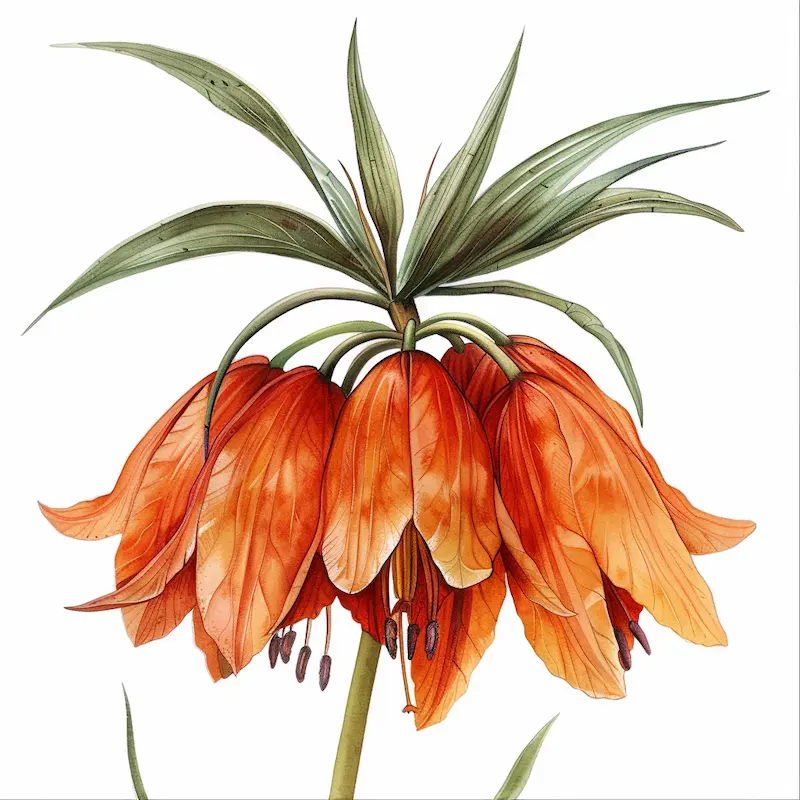
Crown Imperial is one of the most ornamental spring bulbs, which captured the hearts of gardeners in the sixteenth century when it arrived in Europe from the mountainous regions of Iran and Afghanistan. Its history in cultivation spans over four centuries, and its popularity has not diminished to this day. The characteristic dark, glossy bulb of this plant held the status of true exoticism in European gardens of the past, and was considered a mark of refined taste.
A tall, majestic plant unfolds in April and May in a truly 'regal' display: from the tip of the stem hang bell-shaped flowers in shades of orange, bright yellow, and burgundy. The top of the stem is crowned with a cluster of green leaves rising upward like a crown. Today, gardeners can choose from several varieties—from classic bright orange to delicate cream tones. Each plant makes the impression of an architectural sculpture in the garden.
In design, the plant is indispensable: its tall, distinct form works well on flower beds among low-growing spring flowers, and also in mixed compositions with tulips and grape hyacinths. Crown Imperial effectively fills the period when the first flowers have already faded but summer has not yet begun. Interestingly, besides its decorative value, the plant has an excellent reputation among gardeners: wild populations have long known of this, but garden pests—moles and mice—greatly dislike the bulbs of fritillaries and avoid them altogether.
If you have a garden corner where spring begins with a particularly floriferous mood, a place for Crown Imperial is already waiting.
Crown Imperial — planting & location
Bulbous plant with rodent-repellent properties.
How to water Crown Imperial
Reduce watering after foliage dies back.
Fertilizing and pruning: Crown Imperial
Cut back after leaves turn yellow.