Blackberry
Blackberry has been cultivated since ancient Greece—over 2000 years ago.
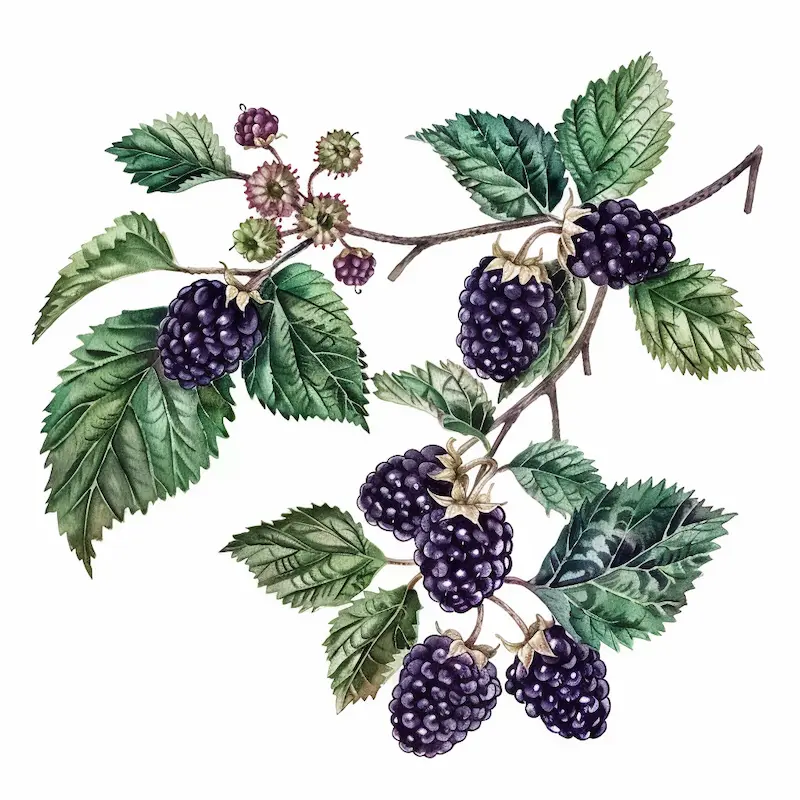
Blackberry is one of the oldest cultivated berry plants, grown since Ancient Greece over two thousand years ago. This spiny shrub originates from the temperate regions of the Northern Hemisphere and has gradually won the hearts of gardeners worldwide thanks to its unpretentiousness and generous harvests. The history of blackberry is closely linked to the development of horticulture — from wild forms to modern cultivated varieties that provide us with succulent berries each August.
No berry crop has transformed as dramatically as the blackberry. Modern varieties impress with their diversity: from low, compact bushes to vigorous canes bearing berries as large as grapes. However, the most significant transformation has been the emergence of thornless varieties, which have made harvesting a genuine pleasure. White and pink flowers bloom throughout summer, from June to August, transforming into black, glossy berries with a distinctive, slightly tart flavour. Each variety is unique — some possess an intoxicating aroma, whilst others are sweeter and meatier.
Blackberry is the queen of the fruit garden for those seeking practicality and beauty simultaneously. It naturally pairs well with raspberry, currant, and chokeberry, creating a vibrant, productive corner of the garden. This plant suits both small vegetable plots and large estates — it all depends on your choice of variety and support method. If you are willing to contend with thorns or select a thornless form, blackberry will repay you with a generous harvest that feeds not only people but also birds, bees, and other helpers in your garden.
Blackberry — planting & location
Large berries, but thorny! Thornless varieties are available.
How to water Blackberry
Maintain moisture during fruit ripening.
Fertilizing and pruning: Blackberry
Cut out spent canes after fruiting.