Red Raspberry
Raspberry is a leader among berries in salicylic acid content (natural aspirin).
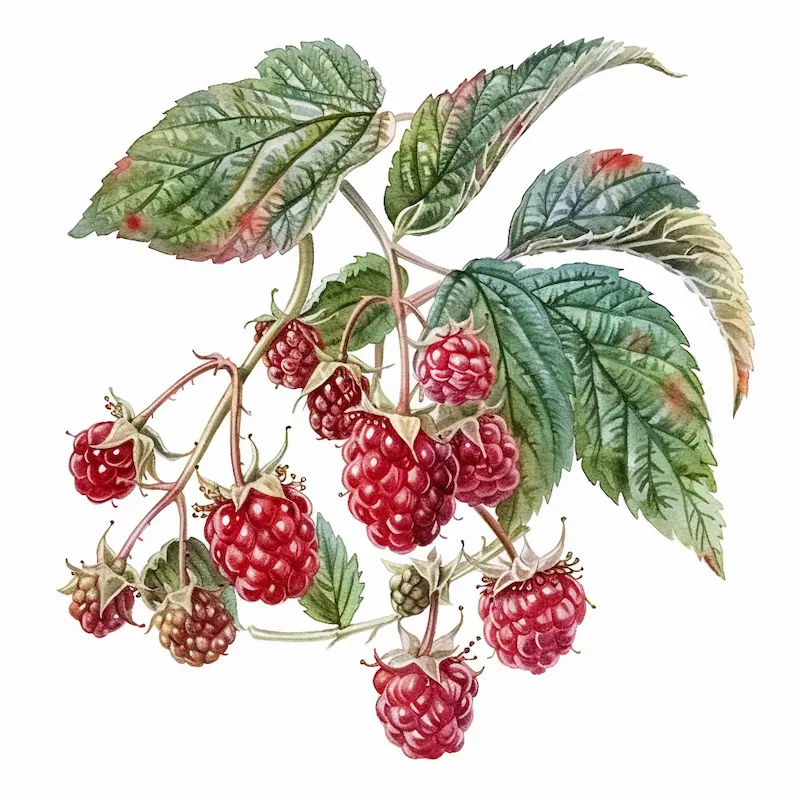
Red Raspberry (Rubus idaeus) is one of the oldest cultivated berry bushes, with origins traced to the mountainous regions of Asia and Europe. This plant has long won the hearts of gardeners thanks to its incredible productivity and ease of cultivation—it is no wonder that raspberries grow in almost every Ukrainian garden for generations.
Raspberries are easily recognised by their delicate red berries and characteristic thorny shoots covered with a bluish waxy bloom. The market offers both classic red varieties and yellow and black cultivars, which differ in flavour and ripening time. Small white flowers are clustered in racemes and appear in July, followed by a generous harvest—which is why raspberries are called the queen of summer berries.
In the garden, raspberries are invaluable both as an independent planting and in hedgerows. They pair excellently with blackberries, currants, and chokeberries, creating genuine berry plantations. Moreover, this plant brings great benefit to wildlife—pollinators, butterflies, and birds—making the garden more vibrant and ecologically balanced.
Incidentally, raspberries are nature's true aspirin: the berries contain salicylic acid in the highest concentration among all cultivated berries, which is why raspberry tea is a classic remedy for colds and inflammation. If you don't yet have raspberries on your plot, this is a clear missed opportunity—they offer you harvest, beauty, and health all at once.
Red Raspberry — planting & location
Pick berries when fully ripe; canes fruit for 2 years.
How to water Red Raspberry
Maintain consistent moisture levels.
Fertilizing and pruning: Red Raspberry
Cut fruited canes down to ground level.