Cornelian Cherry
In Turkey, cornelian cherry liqueur and jam are sold throughout the country.
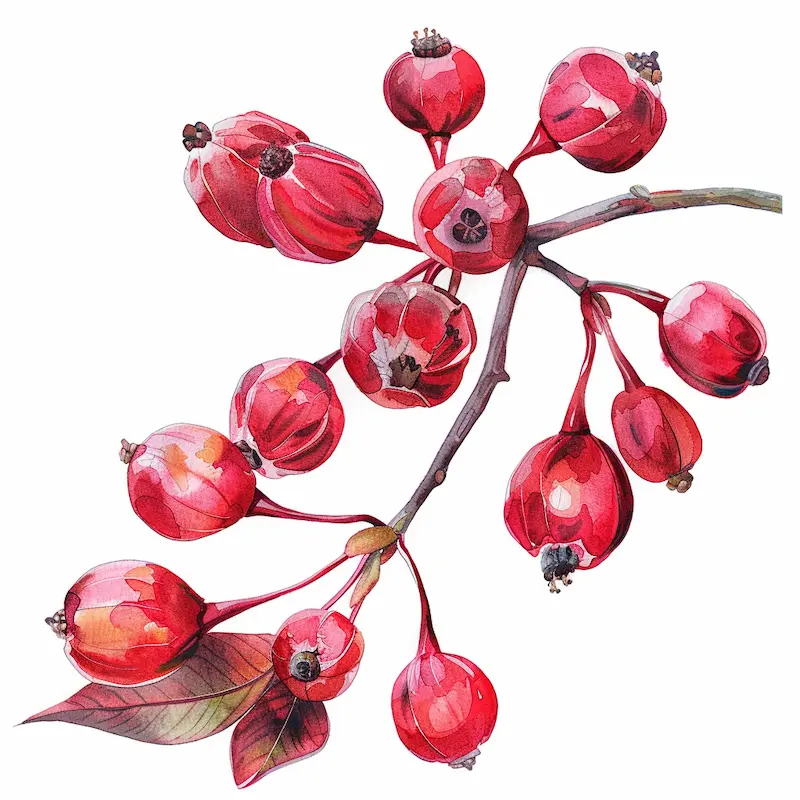
Cornelian Cherry is one of the oldest fruit crops, accompanying humanity for over two millennia. Its native home lies in the Caucasus and Asia Minor, though the plant thrives throughout southern Europe, where it is valued not only by gardeners but also by landscape architects. This remarkable plant flowers early: when most trees still slumber, from February to March the Cornelian Cherry becomes clothed in tiny golden flowers resembling a shower of gold. Because of this early flowering, it is known as the first messenger of spring.
The tree boasts a compact and attractive form with slender branches and narrow leaves. After flowering, small oval fruits develop—initially red, then nearly black when fully ripe. They resemble grapes in size but possess a distinctive tart-acidic flavour with a subtle bitterness. Few ornamental shrubs in the garden offer such aesthetic appeal combined with such complex flavour. Cornelian Cherry cultivars vary in fruit shape and sweetness, ranging from wild types to those perfectly suited for eating fresh from the branch.
In the garden, Cornelian Cherry integrates beautifully alongside apple, plum, or cherry trees, creating a trio of fruit diversity. This undemanding plant thrives in both full sun and light shade, requires infrequent watering, and needs no special feeding. The fruits are an excellent source of vitamin C and other beneficial compounds, which is why cornelian cherry preserves and compotes have been treasured by generations as a natural remedy.
Interestingly, in Turkey and the Caucasus, cornelian cherry liqueur and preserves are an integral part of cuisine, symbolising hospitality. If you seek a plant that combines the beauty of spring blossom, practicality, and fine flavour—Cornelian Cherry is precisely what your garden has been missing.
Cornelian Cherry — planting & location
One of the first trees to flower; produces berries rich in vitamin C.
How to water Cornelian Cherry
Moderate watering
Fertilizing and pruning: Cornelian Cherry
Remove dead branches