Common Pear
First harvest occurs 4–7 years after planting.
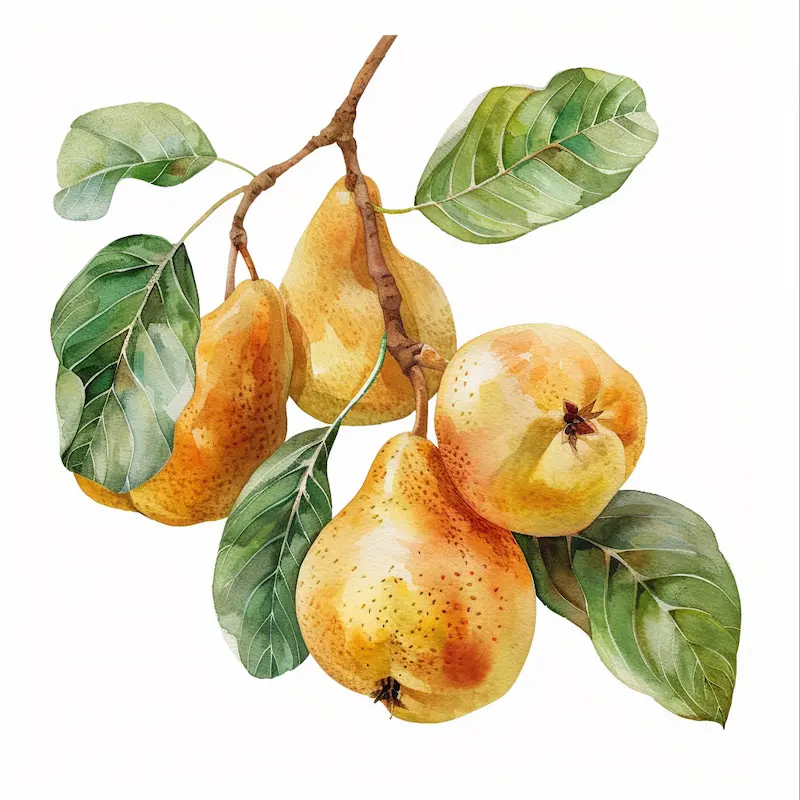
The common pear is one of the oldest fruit crops, cultivated by humans for over three millennia. Originating from Western Asia and Southern Europe, it has firmly established itself in Ukrainian gardens, where it thrives as if in its native habitat. This tree has become a symbol of longevity and stability in many cultures, as it lives and bears fruit for decades on end.
Outwardly, the common pear is truly beautiful, especially in spring when it becomes adorned with clouds of white blossoms from April through May. The crown naturally forms an attractive tiered structure, whilst the foliage displays a soft green hue that pleases the eye throughout the season. The fruits vary in size and flavour depending on the cultivar: from medium and slightly tart to large, juicy and honey-sweet. This very diversity of varieties makes the crop so appealing—you can choose whatever suits your taste.
In the garden, the common pear is an excellent companion to apples, plums and cherries. The tree harmoniously fits into any composition, whether as a focal point or amongst other fruit species. The first harvest typically requires a wait of 4–7 years, but when it arrives, the patience is well rewarded. The pear is undemanding: it requires moderate watering, particularly during fruit development, and thrives without chemical interventions. Regular soil enrichment with organic matter and periodic grafting ensure the tree repays you with a generous harvest.
Interestingly, pear fruits often ripen at different times, allowing the harvest period to be extended and the yield enjoyed over a longer period. Moreover, pears store exceptionally well when harvested and stored correctly. If you dream of a fruit garden requiring minimal effort yet delivering maximum satisfaction, the common pear simply must have a place there.
Common Pear — planting & location
Fruits ripen at staggered intervals and store well.
How to water Common Pear
Regular watering during fruit development.
Fertilizing and pruning: Common Pear
Maintain tiered canopy structure and remove diseased branches.