Williams Pear
Williams pears are used to produce pear brandy (Williamsbirne) in Austria and Switzerland.
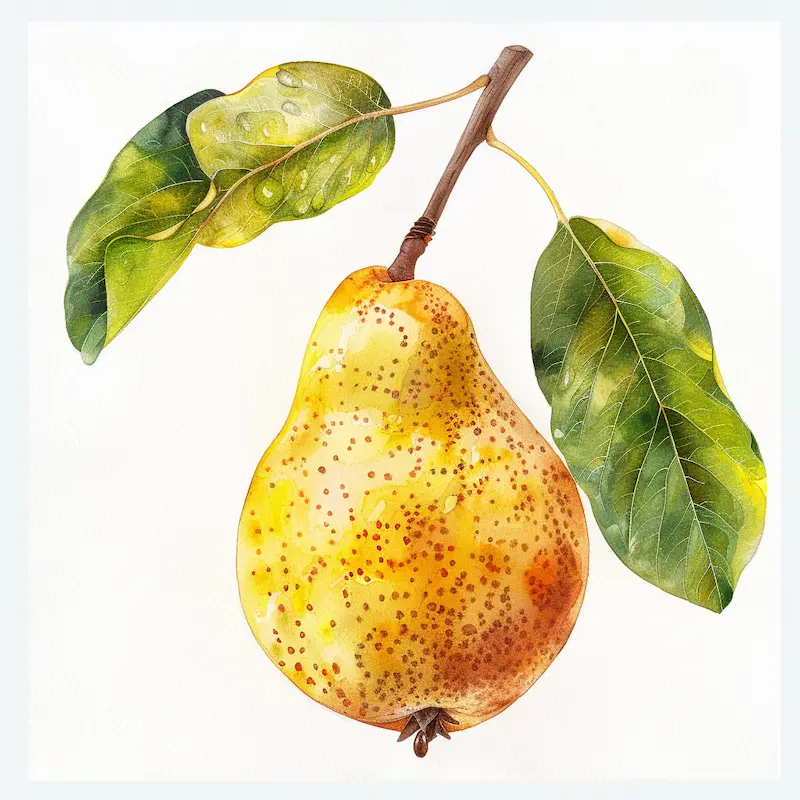
Williams Pear is one of the most popular dessert varieties of common pear, which originated in 19th-century England and has since conquered gardens worldwide. This cultivar is distinguished by its refined flavour and delicate, succulent flesh that melts in the mouth — precisely this quality has made it legendary among gardeners and gastronomes alike. Despite its origins in misty Albion, Williams has adapted beautifully to the Ukrainian climate, particularly in southern and central regions.
In appearance, Williams Pear is a medium-sized tree with an attractive pyramidal crown that naturally maintains a tiered form. In spring, it blooms with delicate, fragrant white flowers arranged in clusters that attract bees. The fruits display the classic pear shape with light yellow colouring, often with a pink blush, and reach optimal flavour during August and September.
In the garden, Williams coexists splendidly with other fruit-bearing trees—apple, quince, and cherry—creating a harmonious fruit-bearing ensemble. The plant is undemanding in care: it requires moderate watering and a well-lit location, and tolerates traditional pruning well. This variety looks equally excellent in a private vegetable garden or in landscape design.
An interesting fact: Williams Pear has become an icon of Austrian and Swiss culture, where its fruits are used to produce the renowned pear spirit Williamsbirne—one of the most refined beverages in the world. If you wish to cultivate a plant that offers not only delicious fruit but also a connection to European gastronomic tradition, Williams is your choice.
Williams Pear — planting & location
Classic aromatic variety with delicate, tender flesh
How to water Williams Pear
Regular watering
Fertilizing and pruning: Williams Pear
Maintain a tiered crown structure