Panicle Hydrangea
Flower colour depends on soil lime content: acidic soil produces blue flowers, alkaline soil produces pink flowers.
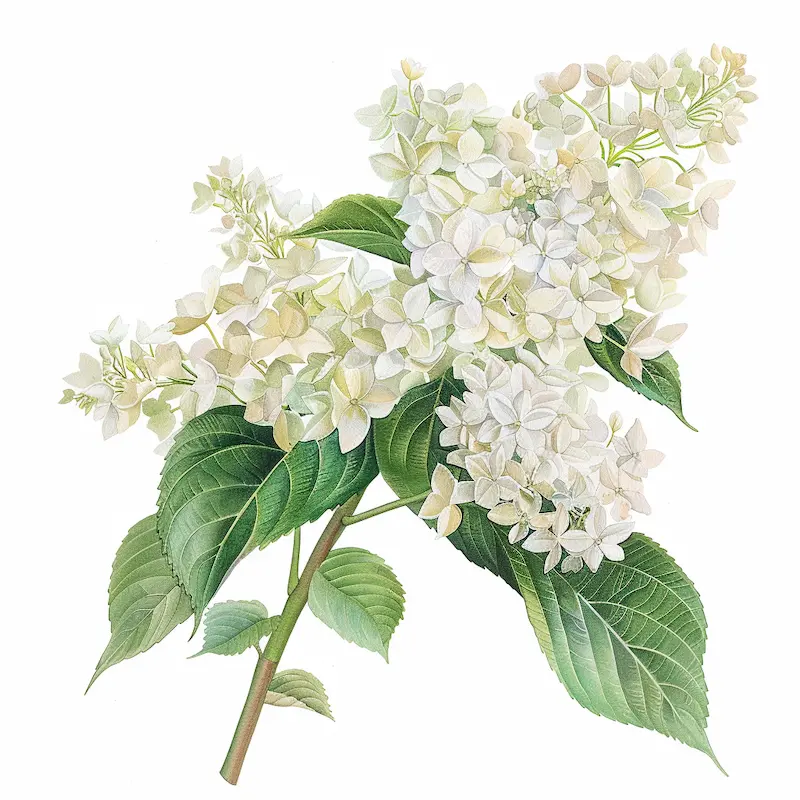
Panicle Hydrangea stands as one of the most undemanding representatives of its genus, distinguishing itself from the traditional image of hydrangeas through its hardiness and ornamental beauty. Native to Japan and the eastern regions of Russia, it has captured the hearts of gardeners worldwide for over a century. Unlike its temperamental relatives, this plant tolerates cold with ease and requires no complex winter preparation—making it ideal for Ukrainian gardens.
Panicle Hydrangea impresses with its striking appearance: majestic pyramidal panicles composed of tiny flowers that change colour throughout summer—from white to cream, then progressing to pink, purple, or yellowish tones. Each cultivar has its own character: some resemble delicate clouds, whilst others form dense garlands. Popular varieties such as 'Grandiflora', 'Limelight' and 'Phantom' have won admirers through their diversity of sizes and colour palettes, allowing gardeners to create compositions to suit any taste.
In the garden, Panicle Hydrangea is indispensable as a central focal point, as a living screen, or as a companion to white and yellow flowers—creating wonderful contrast combinations. Flowering commences in July and extends until the first frosts, filling that period of summer when many plants have already faded. Interestingly, flower colour depends on soil acidity—the more lime and higher the pH, the more pink the blooms become, whilst acidic soil reveals neutral and white tones.
Every gardener should find space for Panicle Hydrangea in their garden—it will not disappoint either the novice or the experienced grower. Its generous flowering and accommodating nature make it a true queen of summer borders.
Panicle Hydrangea — planting & location
Flowers on current year's shoots.
How to water Panicle Hydrangea
Do not allow the soil to dry out.
Fertilizing and pruning: Panicle Hydrangea
Cut back to 2–4 buds from the base.