Astilbe
The name derives from the Greek 'a – without' and 'stilbe – shine' – foliage without lustre.
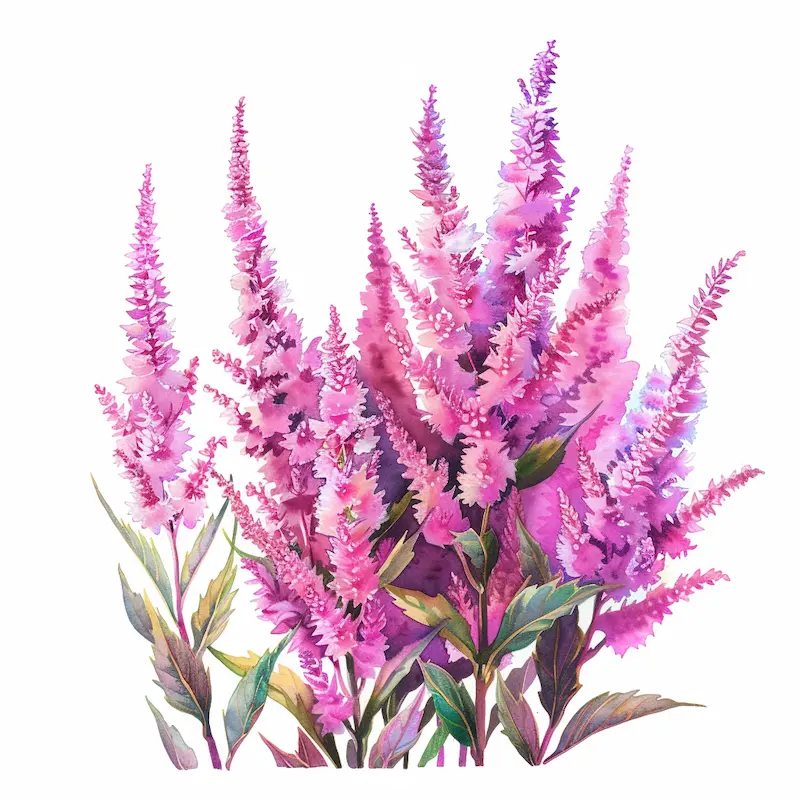
Astilbe is a true queen of shady garden corners, flourishing when most plants struggle in insufficient light. This hybrid was created in Germany in the early twentieth century by plant breeder Georg Arends, who successfully combined the finest qualities of various astilbe species. The result exceeded all expectations: a compact, hardy, and exceptionally ornamental plant that became a favourite among gardeners on both sides of the Atlantic.
The foliage of astilbe is a true work of nature: delicate, fern-like, often displaying copper or reddish tones, especially when young. During the flowering season in June and July, airy plume-like inflorescences rise above the leaves, resembling light feathery clouds in shades ranging from soft pink to deep crimson, pure white to lilac tones. Breeders have developed dozens of cultivars, each with its own charm—from dwarf varieties for alpine gardens to magnificent hybrids reaching over one metre in height.
In the garden, astilbe is a versatile companion for semi-shaded and shaded locations. It looks magnificent on waterside plantings and in boggy areas where other plants often suffer from excessive moisture. It thrives alongside hostas, ferns, primulas, and spring-flowering bulbs, creating harmonious compositions. Mixed plantings of astilbe varieties flower in succession, delighting the eye throughout the summer season.
The plant's name tells an interesting story: it derives from the Greek 'a' (without) and 'stilbe' (lustre)—thus 'astilbe' literally means 'without lustre', as its foliage has a matte, non-glossy character, adding softness and elegance. This is precisely the type of flowering plant one can confidently recommend to beginners: they tolerate mistakes, strengthen year after year, and even when the foliage begins to fade in late summer, the seed heads remain decorative until autumn.
Astilbe — planting & location
Ideal for shaded gardens; moisture-loving.
How to water Astilbe
Do not allow the soil to dry out.
Fertilizing and pruning: Astilbe
Cut back to 5 cm in autumn.