Manchurian walnut
Manchurian walnut is extremely frost-hardy, withstanding temperatures down to –50°C.
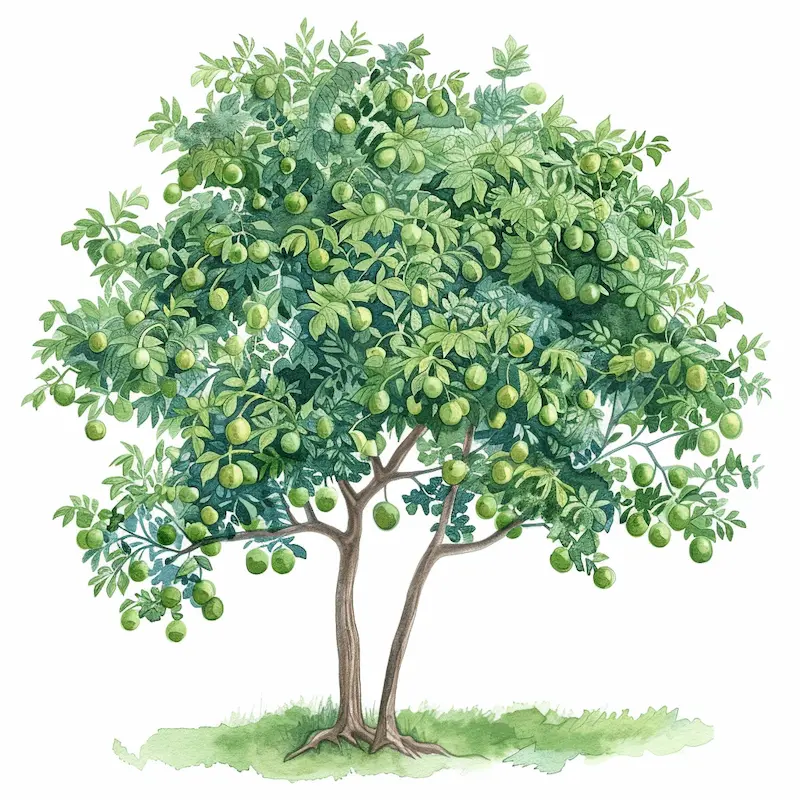
Manchurian walnut is a true treasure for those dreaming of a tree that combines beauty, strength and practicality. Native to the Far East, this species has won gardeners' hearts for centuries with its extraordinary hardiness and majestic appearance. Unlike the more common Persian walnut, the Manchurian variety effortlessly withstands harsh frosts, making it an ideal choice for Ukrainian gardens, especially in northern regions.
The tree is distinguished by a powerful spreading crown and light-green foliage composed of numerous leaflets, creating an enchanting lacy shade. In spring, from April to May, delicate flowers bloom on the branches, attractive to pollinating insects. The fruits—large nuts in thick shells—appear in summer and complete their development by autumn. The tree looks organic both in compositions with birch and ash, and as a standalone focal point in the garden, creating a deep natural atmosphere.
Gardeners will appreciate the Manchurian walnut for its undemanding nature—the plant adapts well to various conditions, requires no complicated care, and thrives in sunny locations with any moderately moist soil. Young trees should be watered regularly during their first year after planting, whilst mature specimens will manage without frequent intervention. This tree is certainly worthy of a place in your garden—it is an investment in beauty for decades to come, a mark of respect for nature and a gift for generations to come.
Manchurian walnut — planting & location
More frost-hardy than English walnut
How to water Manchurian walnut
Water young plants frequently
Fertilizing and pruning: Manchurian walnut
Remove only dead and diseased branches