European Ash
In Scandinavian mythology, 'Yggdrasil'—the sacred tree of the world—is an ash tree.
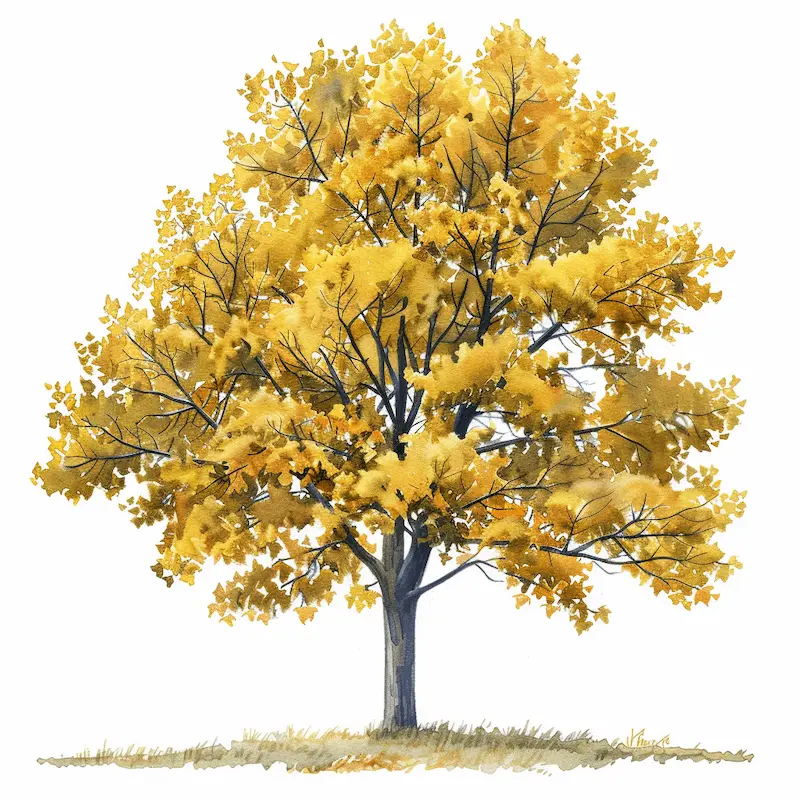
Common Ash is one of the noblest trees of European nature, valued by people for more than a millennium. Its homeland is the forests of Europe and Asia Minor, yet thanks to its hardiness and beauty, ash has spread throughout the world. This tree has always symbolised strength and longevity, which is why it was eagerly planted near homes and sacred sites.
Its external appearance is equally impressive: Common Ash leafs out late in spring, but when delicate, finely-divided foliage appears on its branches, the sight is extraordinary. The compound leaves create a playful interplay of light and shadow in the garden. Among numerous cultivars, the 'Pendula' variety has won particular favour with gardeners—a weeping ash with remarkably elegant, drooping branches as if adorned with tears. Flowering in April occurs modestly but naturally, without excessive grandeur.
The greatest asset of ash is its unpretentiousness. It thrives equally well in sunny areas and light dappled shade, is tolerant of various soils, and requires virtually no special care. This tree can be recommended to both experienced gardeners and those just beginning to landscape their property. Ash combines beautifully in compositions with maple, birch, and linden, creating a natural, authentic garden appearance.
Let us add a fact from ancient times: in Scandinavian mythology, Yggdrasil—the sacred tree that holds the worlds—is ash. Perhaps when you look at a majestic ash in your garden, you will understand why ancient peoples chose it as a symbol of world order.
European Ash — planting & location
Fast-growing, decorative weeping variety 'Pendula'.
How to water European Ash
Water young plants frequently.
Fertilizing and pruning: European Ash
Remove dead and diseased branches.