Honey locust
The thorns of honey locust were used by Native Americans as needles, hooks, and even nails.
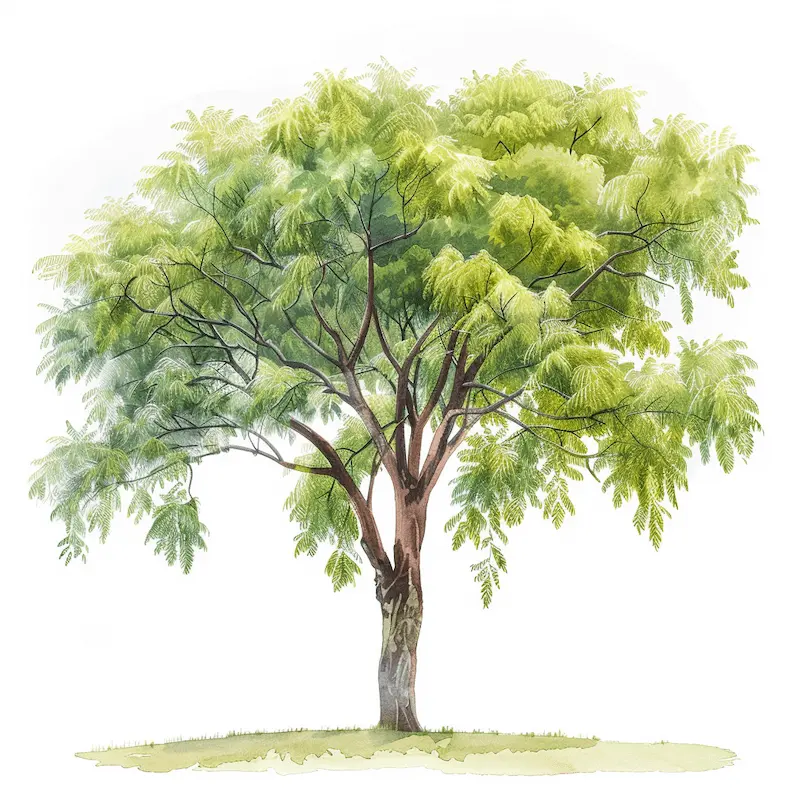
Honey locust is one of the most undemanding trees of North American origin, beloved by gardeners for its elegance and practicality. This plant has been cultivated in European gardens for centuries, and in Ukraine it has gained popularity due to its adaptability to various conditions. Over time, breeders have developed thornless varieties, making honey locust even more attractive for private gardens.
The characteristic dense foliage of honey locust is fine, lacy, and almost fern-like, creating soft shade in the garden. In autumn, the leaves acquire a charming golden hue. In June, the tree becomes covered with small greenish-white flowers that have a pleasant fragrance. Particularly noteworthy is the ornamental cultivar 'Sunburst', featuring bright golden young leaves that transition to green throughout the season. This cultivar is ideal for those who want all the benefits of honey locust without the complications of its spines.
Honey locust blends beautifully into compositions with maple, ash, and acacia, creating a natural, airy atmosphere in the garden. It requires almost no watering after establishment, is undemanding regarding soil composition, and requires practically no fertilization. This tree is ideally suited for gardens in central and southern regions of Ukraine, where it reveals its full potential.
Few people know that Native Americans of North America used the thorns of honey locust very practically—as needles, hooks, and even nails. This testament to the strength of this tree and its deep roots in history. If you are seeking a tree that will be beautiful, undemanding, and at the same time tell the story of continents in your garden—honey locust is exactly what you need.
Honey locust — planting & location
Decorative light canopy with golden foliage (thornless cultivar 'Sunburst').
How to water Honey locust
—
Fertilizing and pruning: Honey locust
Remove dead branches only (wear gloves—thorns present).