Judas Tree
According to legend, Judas Iscariot hanged himself on this tree—hence its name.
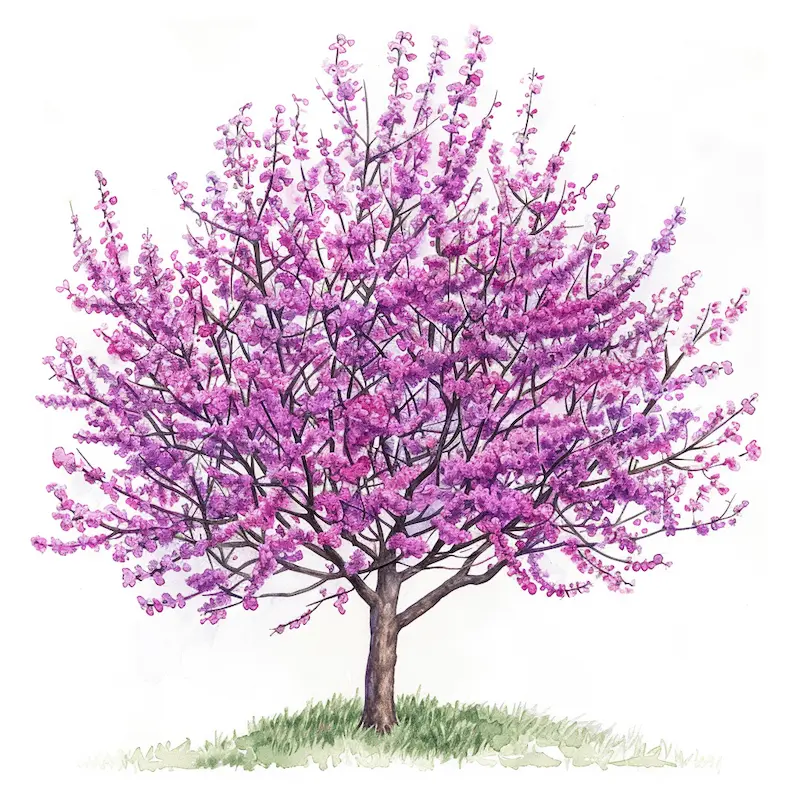
The Judas Tree (Cercis) is one of the most romantic plants of South European origin, which has graced gardens worldwide for centuries. Its history is intertwined with legends and tales, and its refined beauty makes it a cherished addition for anyone who truly appreciates the splendour of nature.
However beautiful cherry blossoms or magnolias may be, the Judas Tree possesses something uniquely captivating—its flowers bloom directly on the trunk and old branches, cascading downwards like dripping wax. Delicate, intensely pink or violet blooms appear even before the leaves, transforming the bare tree into a fairytale vision in mid-spring. Multiple cultivars are available, ranging from pale almost-white to deep magenta shades. Every gardener can select a variant that harmoniously suits their particular space.
In the garden, this tree is a true universal performer—it demands no complicated care, withstands drought periods well once established, and crown formation requires only the removal of dead wood. It pairs beautifully with spring bulbs, lupins, and early perennials. It is easily grown as a standalone focal point or incorporated into a mixed border alongside Japanese maple and white birch.
There is a wonderful legend regarding the origin of its name: according to tradition, Judas Iscariot hanged himself on this very tree. Whilst this is likely merely a beautiful myth, it lends the plant particular poetic charm. What truly matters is that this tree deserves a place of honour in every garden—as a symbol of spring renewal and eternal natural beauty.
Judas Tree — planting & location
Flowers appear directly on the trunk and old branches (cauliflory).
How to water Judas Tree
Drought-tolerant once established.
Fertilizing and pruning: Judas Tree
Remove dead wood only.