Japanese Cherry
In Japan, cherry blossoms symbolise the transience of beauty, with flowering lasting only 7–10 days.
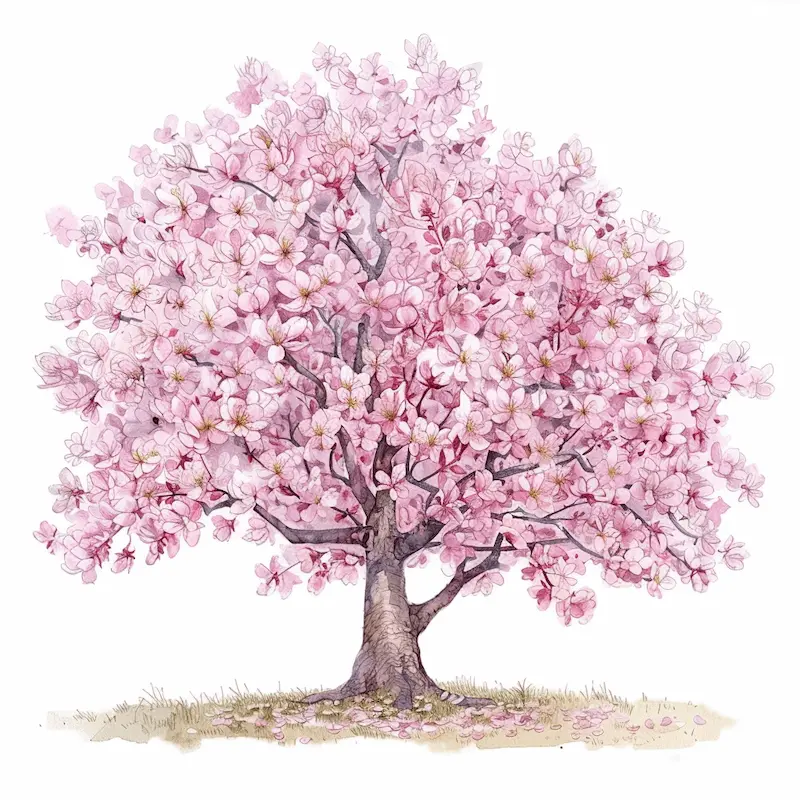
Japanese cherry, known worldwide as sakura, is one of the most enchanting spring ornaments in a gardener's collection. This tree or shrub originates from Japan, where it has been cultivated for over a thousand years, and remains a symbol of spring and renewal to this day. In Ukraine, sakura has gained popularity only recently, yet it has already won the hearts of gardeners thanks to its unforgettable beauty and undemanding nature.
April and May days become magical when trees burst forth with dense clusters of pink and white flowers. They clothe the branches densely, like clouds, creating a truly fairy-tale landscape. There are numerous sakura varieties—from the delicate pink 'Kanzan' to the fully double-flowered 'Amanogawa' with its pyramidal form. Each variety has its own character: some flower more profusely, others hold their colour longer, yet all are equally elegant.
In the garden, sakura neighbours peacefully with magnolia, rhododendron, and Japanese maple, creating memorable compositions. The tree is quite undemanding and suits both small gardens and parks equally well—it simply requires a sunny location and loamy soil. The key is to give it time to establish itself and protect it from overly heavy pruning, as cherry trees tolerate drastic crown intervention poorly.
In Japan, there is even a tradition celebrating sakura's bloom—O Hanami. This testifies to how sacred this plant is considered in Japanese culture. And if you succeed in growing several days of this legend-wrapped beauty in your own garden, it will surely become your favourite for many years to come.
Japanese Cherry — planting & location
Ornamental flowering—Japanese cherry blossom in Ukraine.
How to water Japanese Cherry
Do not allow the soil to dry out completely.
Fertilizing and pruning: Japanese Cherry
Remove only dead branches—cherry trees tolerate pruning poorly.