Japanese Angelica Tree
Aralia is a relative of ginseng and is used in folk medicine as an adaptogen.
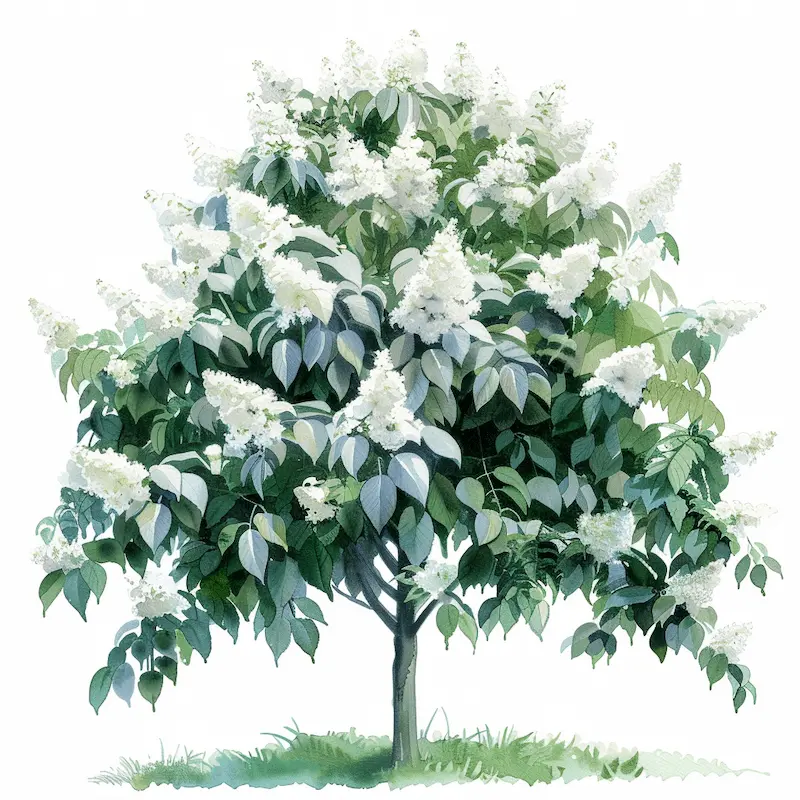
The Japanese Angelica Tree is a true exotic marvel that brings the spirit of Far Eastern nature into an ordinary Ukrainian garden. Originating from the forests of Manchuria, Korea and Japan, where it grows as an understory plant in mixed woodlands, this remarkable specimen has acclimated well to temperate gardens over the centuries, yet remains unjustly overlooked in most private collections. This is not merely a plant—it is a fragment of history awaiting its admirers.
It is a pleasure to observe the Aralia's development in the garden: it unfolds enormous, elegant, doubly pinnate compound foliage that creates a dramatic, delicate dappled shade. The stems are clothed with sharp spines, lending them a primordial character and making the plant an irresistible target for pollinating insects. From July through August, the tree produces delicate lacework of tiny white flowers gathered into large inflorescences, humming with butterflies and bumblebees. For those hesitant about space, more compact cultivars are available that do not occupy excessive room.
In the garden, the Aralia plays the role of a true accent point, a symbol of refined minimalism. It pairs beautifully with Catalpa and Japanese maple, creating compositions infused with Eastern charm. The plant is relatively undemanding in care, though it requires patience during the first years of establishment. It thrives best in central and western regions of Ukraine, where it is reliably protected from severe northern winds.
Did you know that Aralia is a close relative of ginseng? In traditional Eastern medicine, its roots and stems are employed as a powerful adaptogen that helps the body resist stress. This knowledge makes every leaf on your Aralia not merely beautiful, but symbolic—a sanctuary of health and harmony in your garden.
Japanese Angelica Tree — planting & location
Exotic, very large foliage; spines on stems
How to water Japanese Angelica Tree
Moderate watering
Fertilizing and pruning: Japanese Angelica Tree
Remove diseased and excess stems