Kolomikta actinidia
The fruit is 10 times richer in vitamin C than lemon—1500 mg/100 g.
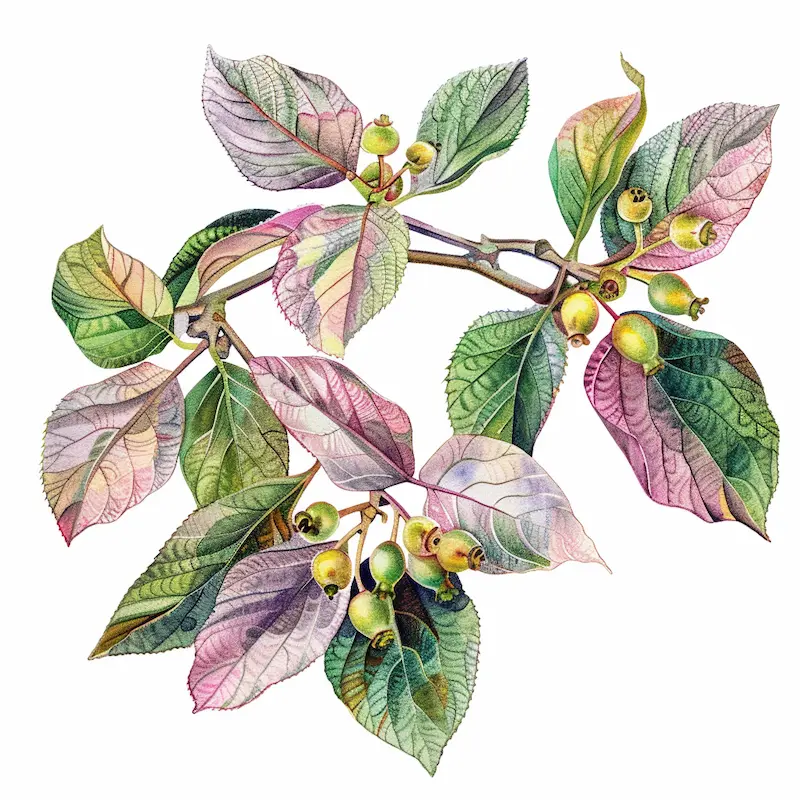
Kolomikta actinidia is a traveller from the Far East, native to the forests of the Amur region. For centuries it grew wild there, yet Europeans and Americans only learned of it in the nineteenth century. Today, this undemanding vine wins the hearts of gardeners worldwide—and rightly so, as it offers summer beauty and a truly unique harvest.
Outwardly, kolomikta actinidia is a true beauty: slender, flexible shoots clothed in heart-shaped leaves that take on a charming variegated pattern during the flowering period (June–July)—white, pink and green tones merge into a single natural work of art. Tiny, delicately fragrant flowers attract bees, and in autumn small delicious fruits appear, resembling miniature kiwi. Among numerous cultivars, 'Pavlovskaya' with early fruiting and 'Sadova' with vigorous fruiting are particularly popular.
In the garden, kolomikta actinidia serves as an enchanting vertical screen. It adorns pergolas, fences and arches beautifully, and its companionship with grape or edible honeysuckle creates a genuine green composition. Fruiting is a real bonus: these small berries astound with their vitamin C content, which is ten times higher than in lemon.
Want a fresh, healthy vine that requires no complicated tricks? Kolomikta actinidia is your choice. Most importantly, plant male and female plants close together to ensure pollination. Then every summer this small marvel of the Far East will bring you happy moments of observation and delicious fruits.
Kolomikta actinidia — planting & location
Small sweet fruits; requires both male and female plants
How to water Kolomikta actinidia
Moderate watering
Fertilizing and pruning: Kolomikta actinidia
Remove weak shoots and maintain on support