Apricot
The apricot is native to China, where it has been known for over 4,000 years.
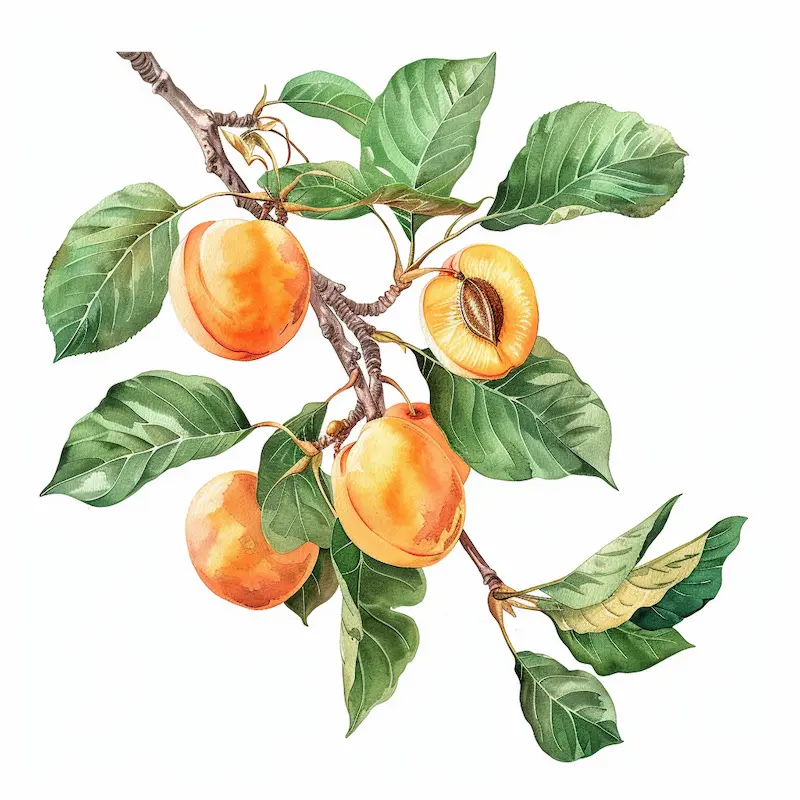
Apricot is one of the oldest fruit crops, offering humanity sweet fruit for more than four millennia. Its native home is China, from where the plant gradually spread to the Middle East, and subsequently to Europe. Today, apricot has become a favourite among gardeners worldwide thanks to its undemanding nature and generous harvests.
In spring, apricot captivates with pink and white blossoms, transforming the garden into a fairytale from March to April. The tree is grown as a low-growing specimen with a dense, well-branched crown. There are numerous varieties—from traditional to modern hybrids—allowing you to select an option for any garden size. Each has its own character: different fruit sizes, ripening times, and flavour profiles ranging from honeyed and delicate to crisp and fresh notes.
In the garden, apricot partners beautifully with peach, plum, and cherry plum, creating picturesque compositions. The plant adores sunlight and light, well-drained soils; it is especially recommended for the southern, central, and western regions of Ukraine. Maintenance is minimal: moderate watering, a thinned crown, and trunk whitewashing in winter—and the tree will serve for decades.
However, be prepared for one surprise: delicate flowers often perish from spring frosts, making the apricot's early flowering always a lottery, a game with nature. It is precisely this unpredictability that makes each harvest a special gift, and each blossom a small victory. Apricot deserves a place in your garden for hope, for spring, and for the taste of summer.
Apricot — planting & location
Early flowering—risk of flower frost damage.
How to water Apricot
Reduce watering in August to promote fruit bud formation.
Fertilizing and pruning: Apricot
Maintain an open, spreading canopy.