Black Mulberry
The berries of black mulberry stain hands and clothing with a persistent dark colour when touched.
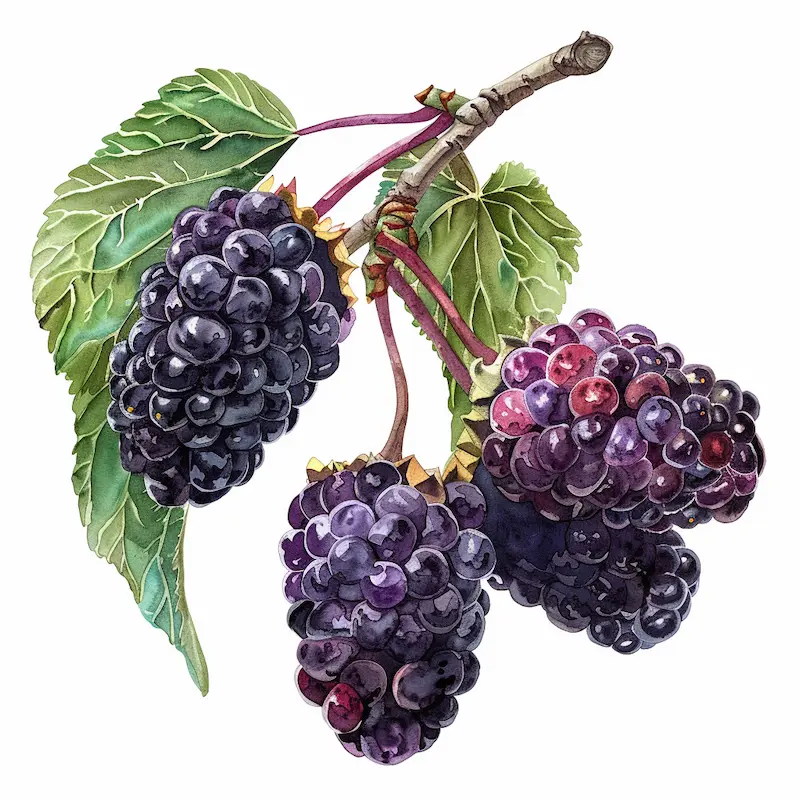
Black Mulberry is one of the oldest cultivated fruit plants, grown by humanity for approximately five thousand years. Native to Western Asia, it became established long ago in the gardens of southern and central Ukraine, where it found a second home. Its borrowed history is rather a tale of how certain plants become true Ukrainians through time and the devotion of gardeners.
Black mulberry impresses with its simplicity and generosity. On a tree with a thick, spreading habit, elongated leaves develop, and when May arrives, delicate flowers appear that quietly transform into wonderful berries. Unlike its white sister, black mulberry produces larger, darker fruit—almost black, with a characteristic flavourful and sweet taste. Each berry is a unique combination of tenderness and richness of flavour.
In the garden, black mulberry is an excellent companion for sour and sweet cherries, creating a harmonious fruit ensemble. It adapts easily to various conditions without demanding complex care or constant attention. In summer, a cosy corner for rest can be arranged beneath the tree—its dense canopy provides blessed shade. However, one should bear in mind: when ripening, the berries easily stain hands and clothing with a persistent dark colour, which lends them a certain wild beauty.
For a true gardener, black mulberry is not merely a fruit crop, but a symbol of patience and annual reward. Plant it once, and it will feed you and your generation generously and with minimal demands.
Black Mulberry — planting & location
Large dark berries that are more flavourful than white mulberry; less frost-hardy
How to water Black Mulberry
Drought-tolerant once established
Fertilizing and pruning: Black Mulberry
Remove diseased and dead branches