Red Oak
American red oak produces acorns twice as early as English oak—by year 20.
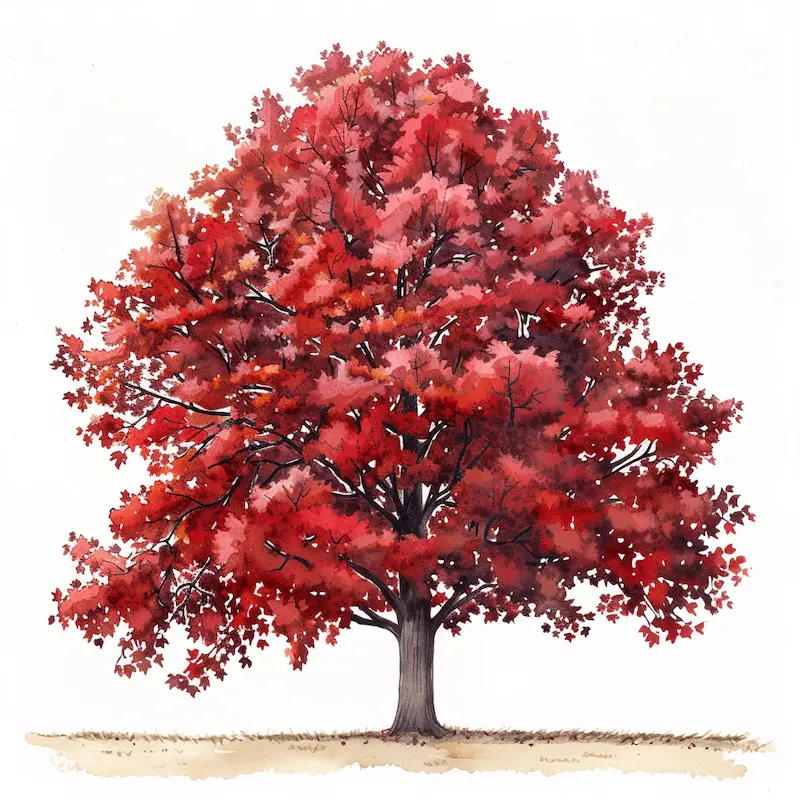
Red Oak is one of the most popular ornamental tree species in North America, captivating gardeners worldwide. This magnificent tree, native to the eastern United States, has long attracted the attention of European horticulturists with its graceful pyramidal crown and extraordinary palette of autumn colours. In its native habitat, Red Oak grows in natural forest stands and has become a symbol of seasonal change thanks to its vibrant crimson and burgundy foliage.
Outwardly, this enchanting tree presents an impression of lightness and elegance. Its young leaves display a light green hue, and as autumn approaches, they ignite in a range from golden-orange to deep burgundy-red—a truly captivating sight! The crown naturally forms a symmetrical pyramid, making the tree an ideal focal point in garden compositions. Flowering occurs in April, though the flowers are not particularly showy—the tree is valued primarily for its foliage.
In the garden, Red Oak becomes a true ornament throughout the year. It harmonises beautifully with birch, rowan, and maple, creating multi-layered compositions in contemporary gardens. The tree is undemanding regarding soil conditions, tolerates even urban environments well, and grows rapidly, making it a popular choice for both small private plots and large parks.
Interestingly, the American Red Oak fruits far earlier than its European relative, the Pedunculate Oak. By its twentieth year, it already produces an acorn crop, whereas the Pedunculate Oak must wait considerably longer. This makes Red Oak a reliable partner for those who wish to see the results of their horticultural efforts within their lifetime.
Red Oak — planting & location
Bright red autumn foliage, fast-growing
How to water Red Oak
Water young trees regularly
Fertilizing and pruning: Red Oak
Remove only dead and diseased branches