Nectarine
The nectarine is a natural mutation of the peach that arose spontaneously several thousand years ago.
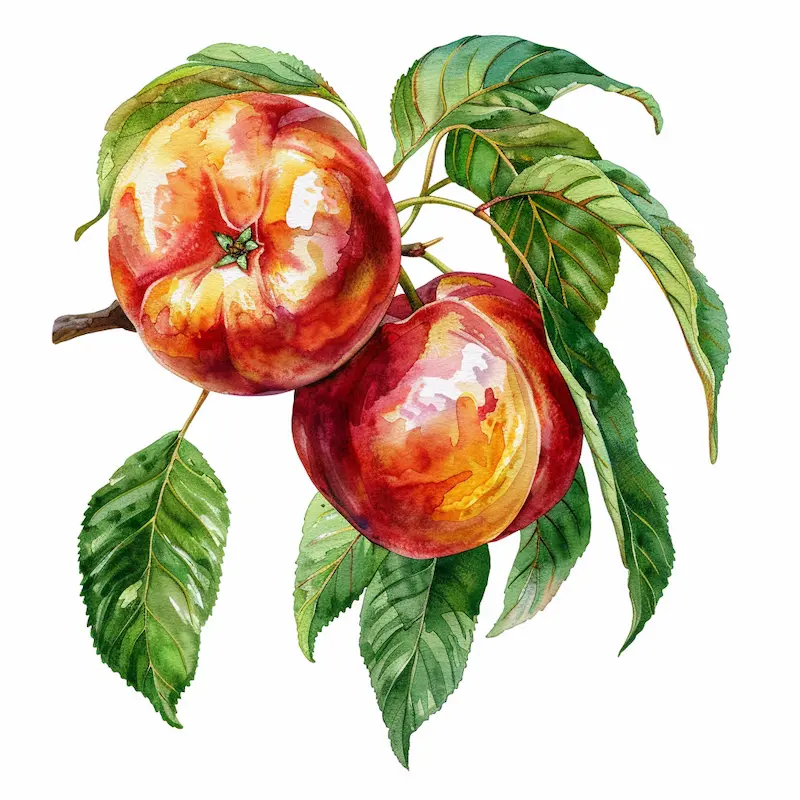
The nectarine is a natural mutation of the peach that arose spontaneously several thousand years ago in China. Unlike its relative, the nectarine has smooth, hairless skin, making it even more delicate to touch and sweeter to taste. This charming characteristic is coded into its very genes, and for many centuries, gardeners have treasured nectarines precisely for this distinction.
In the garden, the nectarine puts on a true spectacle—from March to April, the tree becomes cloaked in delicate pink blossom that looks enchanting against the backdrop of an awakening spring. The plant is modest in height, reaching 3–6 metres, which makes it convenient for a private garden. There are numerous nectarine varieties: from early to late, from red to yellow—every gardener will find a favourite. And most importantly: the tree demands no extraordinary conditions. A sunny location, light soil, and moderate watering will keep it thriving.
The nectarine flourishes beautifully alongside peach, apricot, and plum trees, creating a true fruit oasis. It is a reliable companion for the central and southern regions of Ukraine, where the climate suits it perfectly. The fruit develops best when the quantity of fruits on branches is regulated, allowing the tree to devote all its energy to producing progressively sweeter and larger fruits.
Growing nectarines is not tedious work but genuine joy. When in summer you pick your first sweet fruit, still warm from the sun, you understand why people have cultivated this plant for millennia. This tree is worth having in your garden, if only to experience that enchantment when a fruit crop you have nurtured with your own hands yields the sweetest harvest.
Nectarine — planting & location
Smooth-skinned peach, more delicate and sweeter.
How to water Nectarine
Fruit thinning is mandatory.
Fertilizing and pruning: Nectarine
Similar to peach.